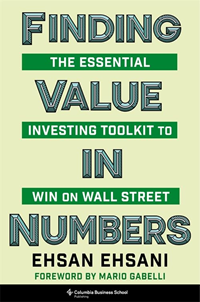
 ● Finding Value in Numbers: The Essential Investing Toolkit to Win on Wall Street
Ehsan Ehsani
Summary via publisher (Columbia U. Press)
To be successful as an investor, one needs a framework. And no investing framework works without numbers. Although quantitative methods can be intimidating, they provide a major boost to the quality of analysis. Written for readers without a technical background, Finding Value in Numbers is an engaging and practical guide to how thoughtful investors can use numbers—not just for the sake of crunching data but for making better decisions. Using a value investing perspective, Ehsan Ehsani shows how to deploy quantitative tools to identify and analyze investment prospects, demystifying the math that points to overlooked opportunities in the stock market, other securities, and beyond.
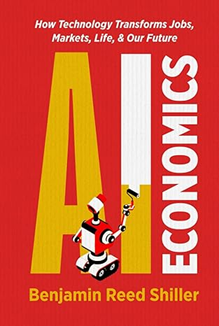 ● AI Economics: How Technology Transforms Jobs, Markets, Life, & Our Future
Benjamin Shiller
Review via Fortune
The weirdest thing of all in economics, says Brandeis University Economics Professor Benjamin Shiller, is that weirdness is closely tied to fate in the age of artificial intelligence (AI). The weirder you are, he tells Fortune, the better off you’ll be.
In his new book “AI Economics: How Technology Transforms Jobs, Markets, Life, and Our Future,” Shiller, argues that the more bizarre your job, the less likely that AI will take it. A specialist in the economics of technological change—and the son of a famous economist in his own right, Yale’s Robert Shiller, the co-creator of a national home price index still in use today, Shiller tells Fortune that the future of employment is weird.
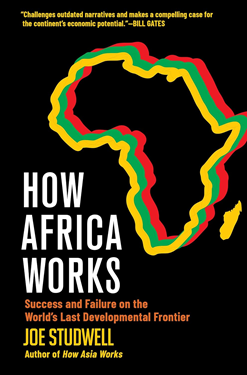 ● How Africa Works
Joe Studwell
Review via The Economist
Africa is adding 300m people per decade: by 2050 it will be home to 2.5bn, a quarter of humanity. As the rest of the world ages, the continent’s youthfulness stands out. It will play a bigger role in the global labour market and as a source of consumers, culture and ideas. Thought-provoking new books about Africa are therefore sorely needed. In “How Africa Works” Joe Studwell, a visiting fellow at the Overseas Development Institute, a think-tank, has written one of the most interesting analyses of the past few years. It will prove valuable reading for anyone curious to understand “the last great frontier of global development”.
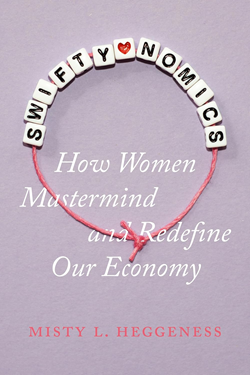 ● Swiftynomics: How Women Mastermind and Redefine Our Economy
Misty L. Heggeness
Review via The New Republic
Dr. Misty Heggeness, a professor at the University of Kansas and former Census Bureau economist, released an analysis last year showing that mothers with young children were leaving the workforce after pandemic-era gains. It was a wake-up call that women with young children had benefited from the remote work–friendly policies and that some of the changes made by the Trump administration, like sweeping federal layoffs, had hit women hardest.
Heggeness had used long-available data from the Current Population Survey for her analysis, but took a unique perspective to understand what was happening to women in particular. Now she’s published a book that does the same. In Swiftynomics: How Women Mastermind and Redefine Our Economy, she replaces the economics discipline’s idea of a rational “Economic Man” with a rational “Economic Woman” to show how our economy is impacted by the care that women provide, the choices they make for their families, and their perseverance despite sexism and discrimination. And yes, her muse on this journey is Taylor Swift.
Please note that the links to books above are affiliate links with Amazon.com and James Picerno (a.k.a. The Capital Spectator) earns money if you buy one of the titles listed. Also note that you will not pay extra for a book even though it generates revenue for The Capital Spectator. By purchasing books through this site, you provide support for The Capital Spectator’s free content. Thank you!