The surprisingly weak retail sales data for July could be an early sign that the recent slowdown in U.S. economic activity will continue in the second half of the year. One monthly report should be viewed cautiously, but a broader review of the latest economic numbers hints that growth may be softer than recent GDP nowcasts imply.
Let’s start with the backdrop that favors an optimistic view. Several estimates of GDP for the current quarter point to a rebound following the modest rise in Q2. The Atlanta Fed’s GDPNow model is especially bullish at the moment, nowcasting that economic output will accelerate to a strong 4.3% annualized pace from Q2’s 1.5% advance.
In the wake of recent consumer data, however, the case for expecting a sizzling recovery in Q3 has weakened. Recent revisions to GDPNow estimates for the quarter have dropped sharply—a trend likely to continue as new numbers for July and August are published.
The decline in retail sales last month is one reason to manage expectations down. Spending fell 0.6% in July, the first monthly decrease since January and the biggest slide in more than a year.
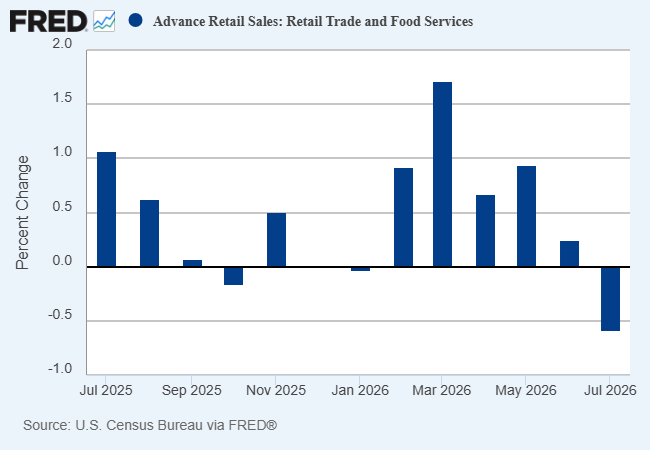
The control group for retail sales—the subset used to calculate GDP, excluding food services, auto dealers, building materials stores, and gasoline stations—also fell, dropping 0.4%, the first decrease in ten months.
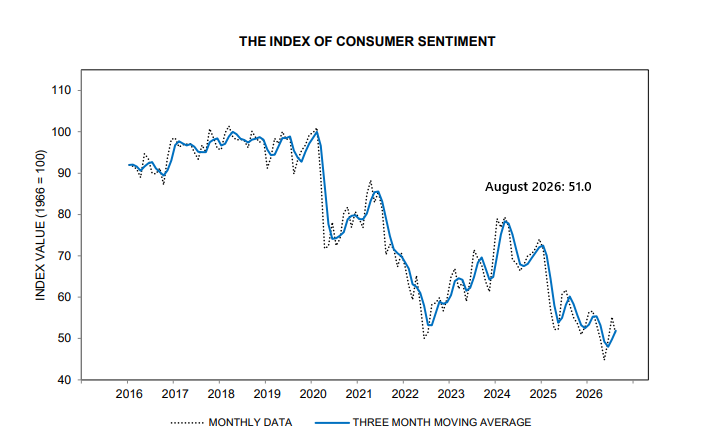
Weaker retail activity isn’t terribly surprising at a time when consumer sentiment has been soft. Sentiment fell 8% in early August, ending two consecutive months of improvement, according to the University of Michigan’s widely watched survey. “Decreases in sentiment were seen across the political spectrum, with Republicans exhibiting the strongest month-to-month decline in August.”
The slowdown in hiring is another factor to consider. The private sector added a sluggish 30,000 jobs in June and July, a sharp downshift from the 200,000‑plus peak in March. Historically slow hiring is less threatening for the economy when immigration drops sharply because weaker labor‑force growth drives the payroll breakeven point toward zero, meaning far fewer monthly job gains are needed to keep unemployment from rising. That, at least, is the theory. But if the economy is creating substantially fewer jobs each month, ripple effects could still roll through the consumer sector—the main engine of U.S. growth.
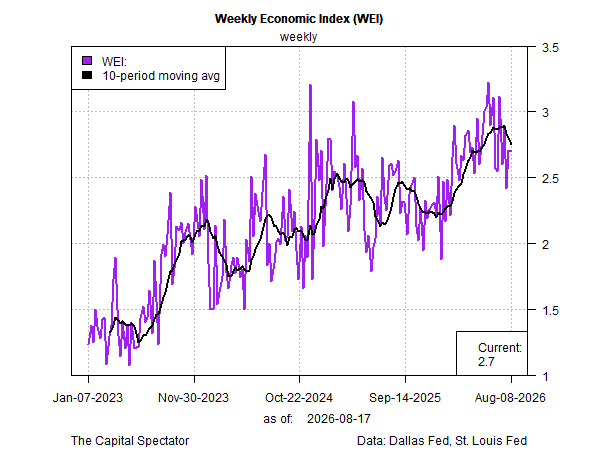
Hints of deceleration in broader economic growth are also showing up in the Dallas Fed’s Weekly Economic Index (WEI). The 10‑period moving average eased for a third straight week (black line in chart below), based on data through Aug. 8. WEI’s implied year‑over‑year GDP growth in early August still points to a firmer trend relative to the Q3 profile, but the downside bias could be an early sign that growth will continue to soften.
A pair of proprietary business‑cycle indicators I track are also picking up signs of decelerating growth. Forward estimates through September suggest that the recent pickup in economic activity has peaked.
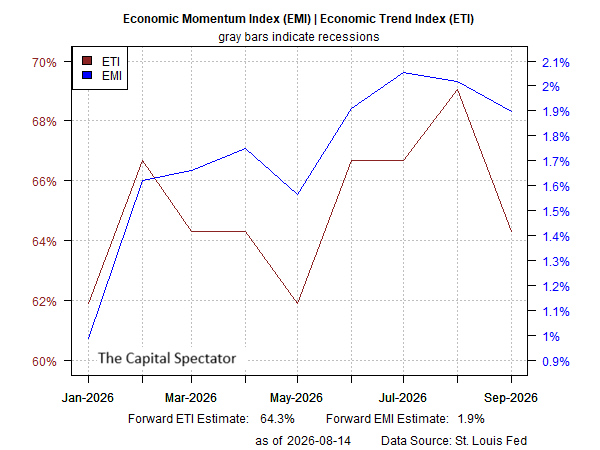
To be clear, the U.S. economy is still poised to expand in the near term, and recession risk remains low. But the latest numbers may be an early sign that the resilience that has surprised and dazzled this year is fading. If this analysis is accurate, there are some positive implications—such as diminishing inflation pressure in the short run, which would allow the Federal Reserve to forgo rate hikes.
The wild card is the bond market, particularly at the long end of the yield curve. A key test centers on the 30‑year Treasury yield, which continues to trend higher. The long bond closed at 5.26% on Friday, near a two‑decade high.
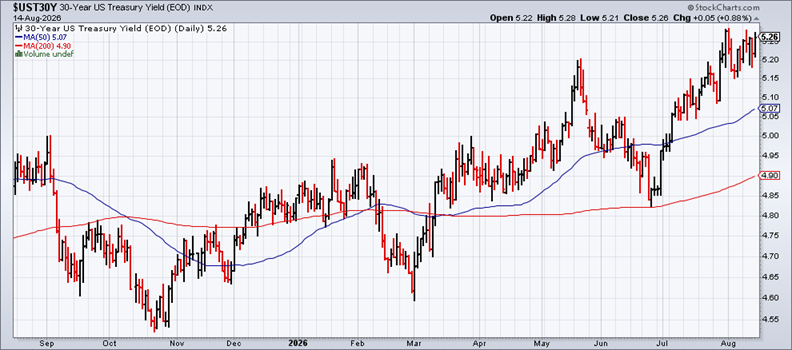
A slower pace of economic activity implies that the recent spike in inflation will continue to ease. If so, the 30‑year yield should begin to stabilize, if not decline. But several complicating factors remain. One is the Iran conflict, which continues to simmer, raising the possibility that headline inflation could stay elevated due to ongoing Middle East energy‑supply disruptions.
A more fundamental issue is U.S. fiscal risk, which may be starting to resonate in the bond market. Surging national debt and massive Treasury issuance may be driving long‑term yields higher as investors demand greater compensation for inflation and credit risks.
The economy isn’t stalling, but it may be losing altitude, a transition that could get messy if long-term inflation worries accompany a short-term downshift in growth.
Is Recession Risk Rising? Monitor the outlook with a subscription to:
The US Business Cycle Risk Report