The brinkmanship between the U.S. government and the bond market continued on Thursday following the Treasury Department’s announcement the day before that it would double repurchases of longer‑dated Treasuries in a bid to lower yields. The statement worked—briefly—as yields dipped in early trading on Thursday, but by the end of the session rates snapped higher.
The question now is whether the government is playing a game of chicken with the bond market. After Treasury said Wednesday that the buyback program would increase to $4 billion from $2 billion, Treasury Secretary Bessent appeared to up the ante on Thursday, telling CNBC that the program “could be more than the $4 billion per issue.”
Asked whether the amount of money allocated to buybacks could rise, Bessent said: “We’ll see what the conditions are, and you know we will analyze them.” He added: “All we’re trying to do is get people to focus on the fundamentals and not trade the headlines during a quiet period in a thin market.” In a pointed reminder to traders, he emphasized: “We have a big toolkit, so we’ll see. Part of it is signaling here and to show that we believe that the yields don’t reflect the underlying fundamentals.”
Two days isn’t enough to reliably judge how the bond market will react to the government’s efforts to cap—if not suppress—yields. Arguably the results since Wednesday’s buyback announcement amount to a stalemate. The real test will play out in the bond market in the weeks ahead and how the recent upward trend in yields evolves.
For context, here’s the current state of play for three key maturities: 2‑, 10‑, and 30‑year yields.
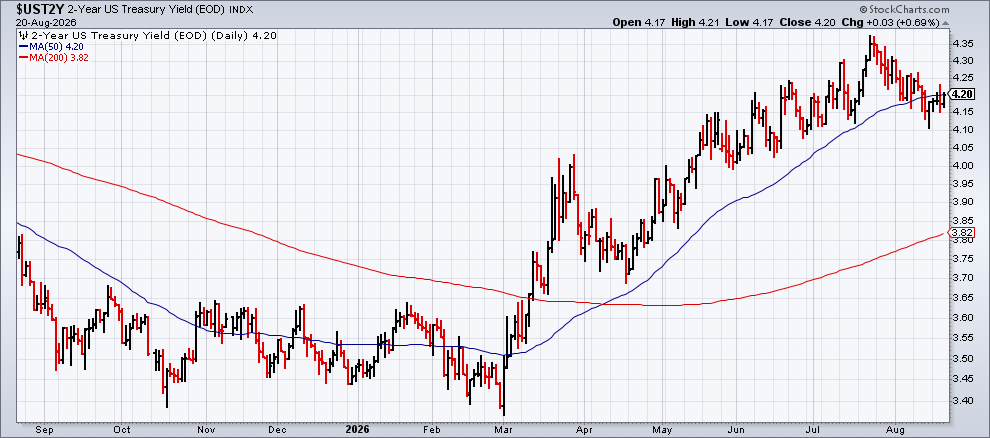
The 2‑year yield, widely watched as the market’s outlook for near‑term Federal Reserve policy, is relatively insulated from the tug‑of‑war at the long end of the curve. Still, its recent slide from the July peak has stabilized in recent days, closing Thursday at 4.20%. That remains well above the Fed’s 4.50%–4.75% 3.50%-3.75% target range, meaning the market is still pricing in a rate hike. The key question ahead: Will the uncertainty at the long end spill into the 2‑year and push it higher? If so, pressure on the Fed to lift its policy rate will intensify.
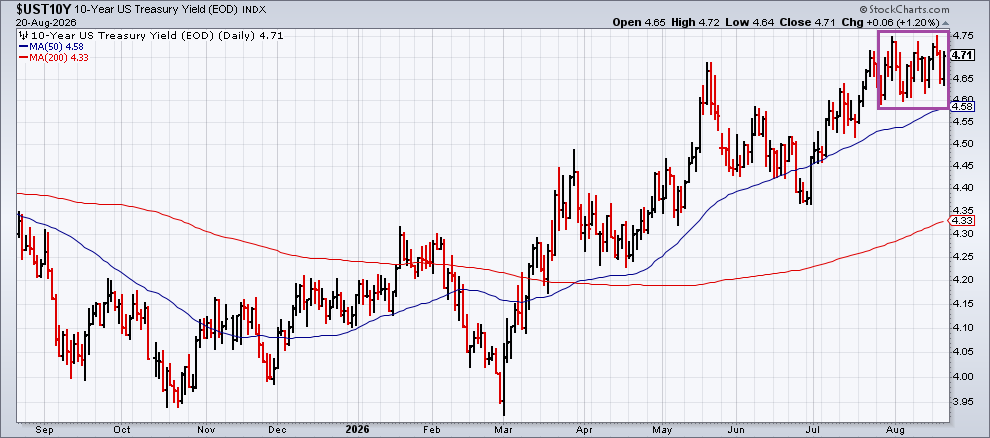
The benchmark 10‑year yield, by contrast, continues to trend higher by comparison, though recent sessions show a shift toward range‑bound trading. A breakout—above or below the recent range—will be a critical signal for where the market is headed for the rest of the year.
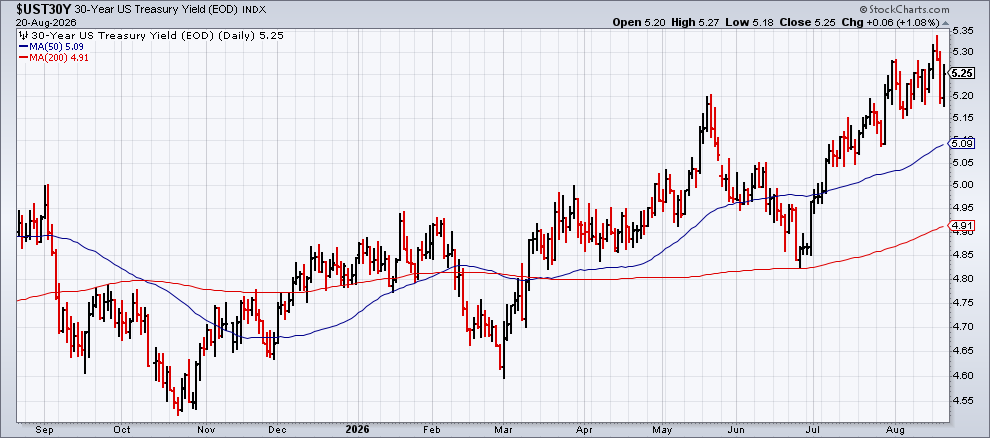
The main event for judging Treasury’s success or failure in capping, or even lowering, yields will likely unfold with the 30‑year maturity. The long bond is trading below Monday’s brief push toward 5.34%, but it’s unclear whether the market will be persuaded by Treasury’s jawboning and expanded repurchase plans. A breakout above Monday’s peak would send a strong message that traders remain unconvinced Treasury can influence, much less control, the long end of the curve.
The government’s challenge is that the forces driving long yields higher can’t be resolved with press releases or TV interviews, at least not for very long. Markets remain focused on ballooning federal debt, persistent inflation uncertainty—fueled in part by the conflict with Iran—and unsettled monetary‑policy expectations as new Fed Chairman Kevin Warsh finds his footing and refines his public messaging.
A risk for Treasury is that its effort to nudge the market toward a less hawkish outlook could backfire. The worst‑case scenario is that Bessent and company repeatedly escalate buyback plans while the market shrugs and pushes yields higher. That outcome would embolden bond bears and potentially unleash a deeper, more prolonged selloff in fixed-income markets.
These are still early days, and the feedback loop between markets and policymakers remains fluid. Even if yields stabilize or decline in the near term, the underlying risk factors that brought us here remain firmly in place: rising federal debt and an unstable Middle East that could trigger fresh spikes in energy prices—and inflation—at any moment.
For now, the Treasury may be talking tough, but the bond market is still deciding whether to blink—or bare its teeth.
Is Recession Risk Rising? Monitor the outlook with a subscription to:
The US Business Cycle Risk Report
Mr. Picerno: You state “That remains well above the Fed’s 4.50%–4.75% target range..” Is it possible you mean 3.50%-3.75%?
Yes, that was an misquote, sorry. Meant to write 3.50%-3.75%.
–JP