Daily Archives: April 21, 2010

NEW MONEY, SAME OLD CHALLENGES

Nothing really changes in the money game, although the face of the currency gets a makeover every so often, as the redesigned $100 bill attests. “In order to protect your money and keep counterfeiting low, the United States government continues to enhance the security of its currency,” the Treasury’s “New Money” web site reports. The latest roll-out is the new C note, which “incorporates the best technology available to ensure we’re staying ahead of counterfeiters,” said Secretary of the Treasury Tim Geithner in the accompanying press release issued today. Colorful, isn’t it? Of course, there’s still no technology that will prevent currencies, freshly designed or not, from losing their purchasing power. That age-old challenge still requires some very old-fashioned ideas.
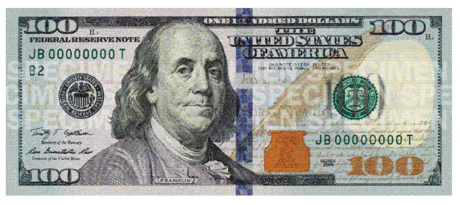
New & Improved?

THE IMF ISSUES A RED INK WARNING

We’ve heard it before, but the IMF is telling us again: there’s a lot of debt sloshing around in the global economy, and more is on the way. The question before the house: At what point will ballooning deficits reach the financial tipping point? Whatever the answer, we seem to be moving closer to that hazardous peak. That doesn’t mean we’re destined to reach it, but the alarm bells are now ringing loud and clear.

Continue reading

THE KEY QUESTION IN THE GOLDMAN SACHS CASE

The SEC’s case against Goldman Sachs, in which the investment banks is charged with fraud, raises a sea of questions, ranging from: What defense will the company use? How will the case affect Goldman’s business and reputation? What will the legal precedent be for dealing with clients? But the at the core of what promises to be a legal thicket is a rather simple narrative that demands a simple answer. James Stewart in today’s Wall Street Journal explains:
Goldman hasn’t disputed the basic facts in the SEC’s narrative: (1) that the company allowed its client Mr. Paulson, who famously made billions betting that subprime mortgages would default, to play a role in the selection of a portfolio of the worst imaginable subprime mortgages that would be packaged into a collateralized debt obligation, and (2) that the bank failed to disclose to clients to whom it sold those CDOs that it had, in effect, let the fox into the henhouse. Goldman claims its sophisticated clients wouldn’t have cared about such information or considered it important, but if that’s the case, why did Goldman conceal it? Goldman collected millions of dollars in fees from Mr. Paulson, who bet against the doomed securities, and from the clients who invested in them.