The US–Iran conflict appears to be winding down, but even if such optimism is premature, the American economy remains on track to post a stronger growth rate in the upcoming second-quarter GDP report.
Output growth for Q2 is currently estimated at 2.5% (real annualized rate), based on the median for a set of nowcasts compiled by The Capital Spectator. The estimate translates to a solid rebound in growth following the 1.6% increase in Q1.
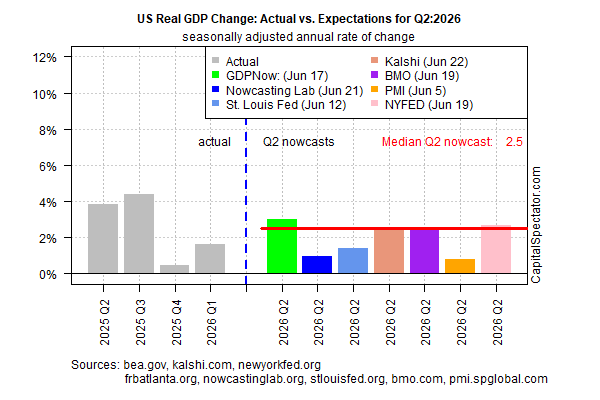
Today’s update is unchanged from our previous median 2.5% growth estimate for Q2. The recent stability in the data provides a degree of confidence in expecting a faster pace of growth in the April-through-June period.
Reports that the US and Iran concluded talks in Switzerland today for “a roadmap” to reach a final deal in 60 days offer fresh hope that the Middle East crisis has peaked and will be a fading headwind for global growth. In turn, that opens the door to a gradual rebound in energy exports from the Gulf and provides relief from the recent inflation surge that has threatened to derail the global economy.
The durability of any deal remains to be seen, but even if fighting flares up again, the US economy at this point appears poised to extend its reacceleration from the near-stagnant rate of growth in last year’s Q4.
Early in the war, some economists warned that the conflict would quickly lead to recessionary conditions in the US. But those fears proved to be ill‑founded. Nowcast updates on these pages throughout the conflict routinely highlighted resilience in Q2 GDP estimates – see here and here, for example.
Similarly, The Capital Spectator’s business‑cycle model in recent months has consistently estimated a low probability that the start of an NBER‑defined downturn was near.
The US–Iran peace may be precarious, but today’s news of “encouraging progress” lay the groundwork for a kinder, gentler macro outlook in the near term. Even if the optimism proves illusive or premature, the latest numbers suggest that the US will still report a relatively upbeat GDP result for Q2 in next month’s official update from the Bureau of Economic Analysis.
Is Recession Risk Rising? Monitor the outlook with a subscription to:
The US Business Cycle Risk Report