 The Capital Spectator is taking an extended Memorial Day holiday and trading NJ for Italy for the week ahead. Postings will be light to (probably) non-existent during the interim. The US-based routine resumes again on June 2. Ciao!
Monthly Archives: May 2026
Book Bits: 23 May 2026
 ● Yuppies: The Bankers, Lawyers, Joggers, and Gourmands Who Conquered New York
Dylan Gottlieb
Review via The Wall Street Journal
“Violent gentrification” is an eye-catching phrase akin to “Canadian depravity” or “Luxembourgish aggression.” If it exists, it isn’t obvious. In “Yuppies: The Bankers, Lawyers, Joggers, and Gourmands Who Conquered New York,” Dylan Gottlieb does his best to alarm readers about his subject and their nefarious doings, such as moving into dicey neighborhoods and turning them into havens for fragrant bakeries and adorable cafes.
The term “yuppie” is as closely tied to the 1980s as “hippie” is to the ’60s. Young urban professionals have usually been discussed in comic terms, by such writers as Tom Wolfe and P.J. O’Rourke, with gentle mockery or even wry affection. Mr. Gottlieb, a professor of history at Bentley University, produces nearly 300 pages on the topic without a trace of humor, except in quotation.
Headline Inflation Surges, but Core Measures Keep the Fed on Hold
Inflation has climbed in the wake of the energy shock stemming from the Middle East, and economists expect the upward pressure to persist in the months ahead. The Federal Reserve is monitoring the data closely, but it left interest rates unchanged at its most recent policy meeting late last month. The Fed funds futures market is still assigning high odds to the Fed holding steady at the next several meetings. The question now is how high inflation will rise before the central bank feels compelled to resume rate hikes.
US Growth Nowcast for Q2 Holds Firm as Inflation Risks Mount
US economic growth remains on track to post a modestly stronger increase in the second quarter compared with Q1, according to the median nowcast from a set of estimates compiled by CapitalSpectator.com. Despite heightened inflation risks stemming from the Middle East energy shock, output appears relatively resilient so far for GDP in the current quarter.
Real Yields Near 20-Year Highs As Energy Shock Continues
The 10‑year real US Treasury yield is hovering near a 20‑year high, with the 5‑year not far behind. Whether this is a good moment to lock in inflation‑indexed yields may hinge on how the Gulf crisis evolves in the months ahead.
Rising Misery Index Signals Mounting Economic Pressure
Economic headwinds continue to reverberate from the conflict in the Middle East, but the US economy has proven relatively resilient in the wake of this macro shock. How long that resilience lasts is unclear, but the pressures are building. That’s a worrisome sign as the stalemate between the US and Iran continues and energy exports from the Gulf remain blocked.
As Inflation Heats Up, the Bond Market Loses Its Cool
The bond market will be the center of attention for investors this week as they assess how much inflation risk is lurking. Official reports already highlight accelerating pricing pressures, driven by Middle East turmoil that has lifted energy costs and raised headline measures of inflation. The debate is whether the run‑up in inflation is temporary or reflects a shift that will persist. Bound up with that question is how the Federal Reserve should respond.
Book Bits: 16 May 2026
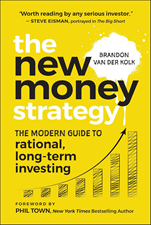 ● The New Money Strategy: The Modern Guide to Rational, Long-Term Investing
Brandon van der Kolk
Summary via publisher (Wiley)
The New Money Strategy: The Modern Guide to Rational, Long-Term Investing is the ultimate strategy guide to help a new generation of investors harness the power of value investing and the stock market. In this book, Brandon van der Kolk, founder of the popular New Money YouTube channel with more than one million dedicated subscribers, reveals the common mistakes people are making in the markets today and the time-tested strategy to build long term wealth.
Factor Extremes: Momentum Runs Hot as Low-Vol Stumbles
The US stock market surged to yet another record high on Thursday, a new milestone that suggests a rising tide is lifting all equity sectors. Yet reviewing the market through a risk-factor risk lens tells a more nuanced story, revealing a wide dispersion of trends that have emerged since the conflict with Iran began on Feb. 28, based on a set of ETFs through yesterday’s close (May 14).
Treasury Premium Climbs Again, Fueled by Sticky Inflation
The market premium for the US 10-year Treasury yield over a fair‑value estimate remained modest in April but has been edging higher after falling to a near‑equilibrium level late last year. The threat of higher inflation stemming from the Iran conflict remains a risk factor, though the repricing of the market premium has been modest so far.