For anyone expecting that slower US economic growth will help cool inflation in the near term, the latest nowcasts for next week’s third-quarter GDP report offer little support.
The median estimate for a set of nowcasts compiled by The Capital Spectator continues to point to an acceleration in growth. Output is on track to increase at an annualized 3.2% for the July-through-September period, based on the median, a solid improvement over Q2’s 2.2% rise.
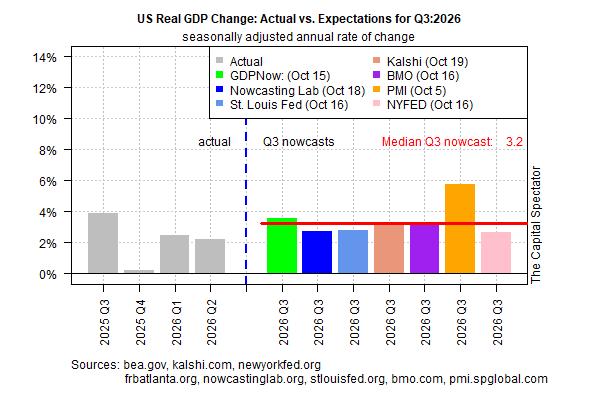
Today’s estimate is unchanged from the previous nowcast, published on Oct. 9, which suggests that there’s a relatively high degree of confidence in the outlook for the Oct. 29 release from the Bureau of Economic Analysis.
Stronger growth would be welcome news, but it would add another wrinkle to the inflation debate as concerns about price pressures intensify. Last week’s trifecta of hotter-than-expected inflation reports suggests that price pressures may be accelerating. Consumer, wholesale, and import inflation all posted substantially higher increases in September than economists projected.
The bond market sent a somewhat nuanced message last week. On the one hand, hotter-than-expected CPI and PPI reports initially triggered a Treasury selloff, pushing the 10-year Treasury yield as high as 5.3% and lifting expectations that the Fed could remain hawkish. The move reflected concerns that inflation pressures are proving more persistent than expected.
Yet yields retreated later in the week as investors stepped back into Treasuries despite the inflation data.
One interpretation is that while the bond market acknowledges inflation risks, it is becoming less convinced that stronger inflation automatically translates into materially higher long-term interest rates. The rally in bonds later in the week suggests some investors see current yields as attractive and may be increasingly concerned that restrictive financial conditions and elevated borrowing costs will eventually cool economic activity.
For markets, the key takeaway may be that inflation worries remain alive, but the bond market is not yet signaling a loss of control over the inflation outlook. Instead, last week’s action suggests an ongoing tug-of-war between sticky inflation and expectations that high rates themselves will ultimately slow growth.
The trading week begins with high expectations that the Federal Reserve will leave its target rate unchanged at next week’s policy meeting on Oct. 28, a day before the Q3 GDP report is published. The odds then flip in favor of a rate hike at the December meeting, based on the futures market.
A key indicator to watch this week is the policy-sensitive 2-year yield, which fell on Friday to 4.72%, the lowest close in nearly a month. That’s still well above the Fed’s current 3.75%-4.0% target range, which points to market expectations for another rate hike.
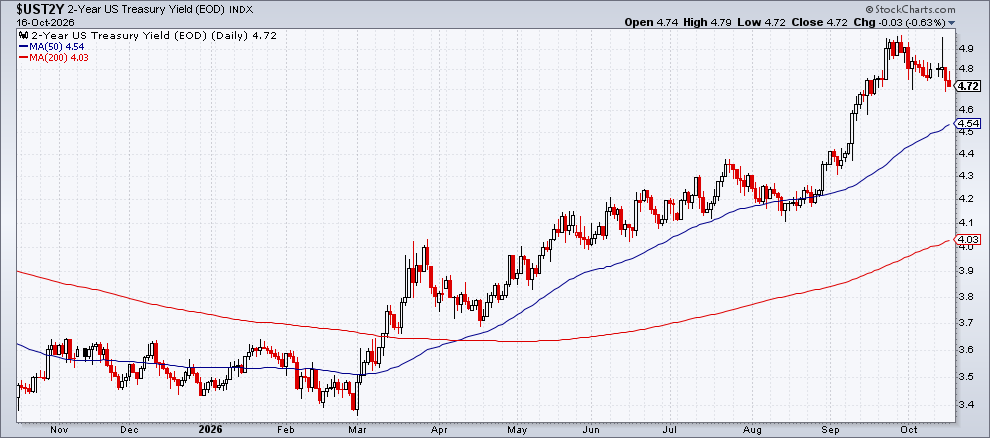
Yet the recent slide in the 2-year yield also suggests that the bond market is a bit more comfortable with the current level of interest rates, which shot up in September. A light schedule for economic reports this week probably won’t change expectations, although the following week’s September update on the Personal Consumption Expenditures price index, the Fed’s preferred inflation gauge, could refocus minds on inflation risk.
Inflation is already top of mind among voters heading into next month’s midterm elections. A new survey of workers highlights that high prices are the primary concern across the political divide, suggesting that the Fed’s expected bias toward patience on policy tightening may be short-lived, if not already out of date.
Monitor US economic conditions with a subscription to:
The US Business Cycle Risk Report