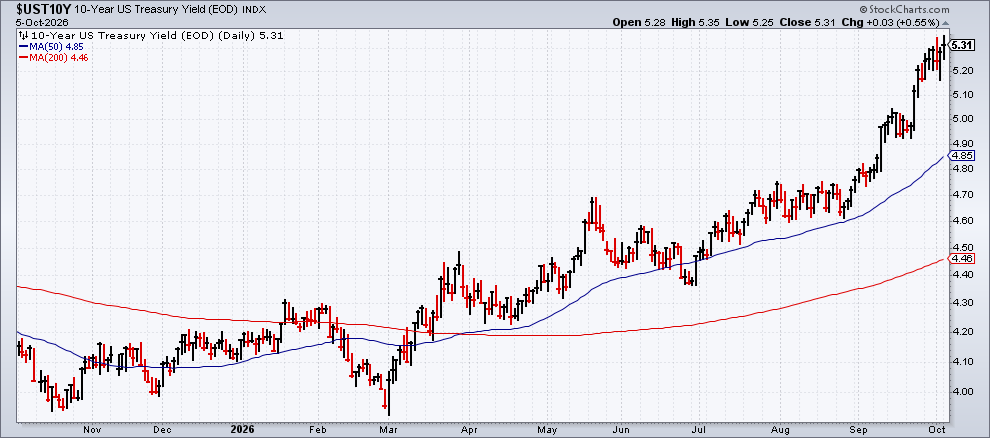
Treasury yields pushed higher again on Monday, with several key maturities reaching fresh multi-decade highs. Multiple forces are driving market rates upward, and there is little indication that relief is imminent.
The 10-year yield rose to 5.31% yesterday, the highest level since 2002.
A contributing factor in the jump: the September Prices Index for the ISM Services Index, a monthly survey of businesses, rose for the sixth time in the past seven months to its highest level in more than four years (blue bar in chart below).
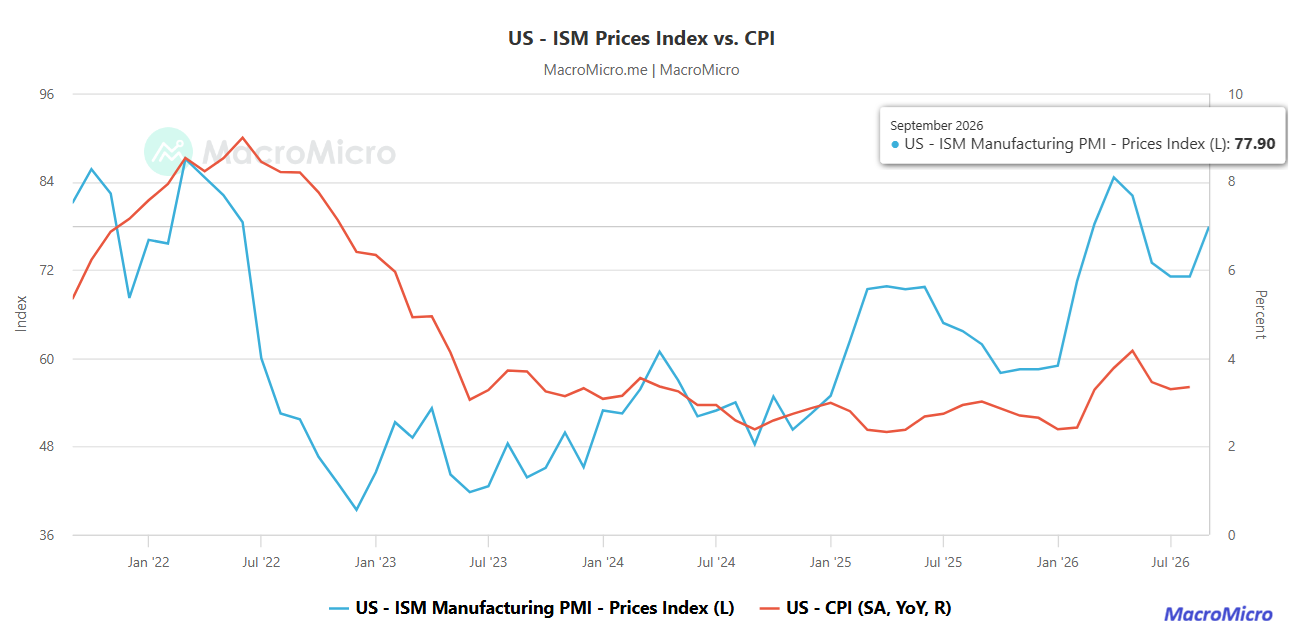
Inflation, the ISM data suggest, remains a concern. Using the services price data as a guide implies that the consumer price index’s 1-year trend (red bar in chart above) will move higher in the months ahead.
The recent rebound in oil shipments from the Middle East suggests otherwise. Weekly crude exports have rebounded to a level close to the pace that prevailed before the first attack on Iran. But the disinflationary effect of this recovery may be weaker than it appears in the near term because refined fuel production and exports continue to lag the rebound in crude oil production.
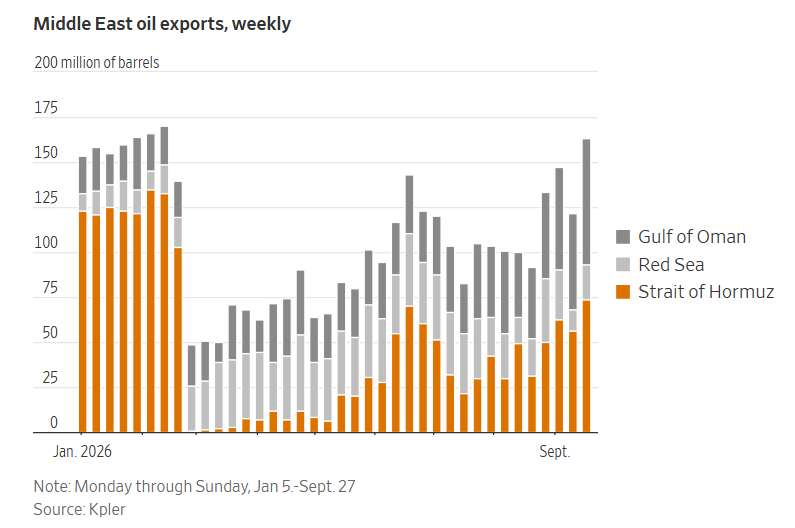
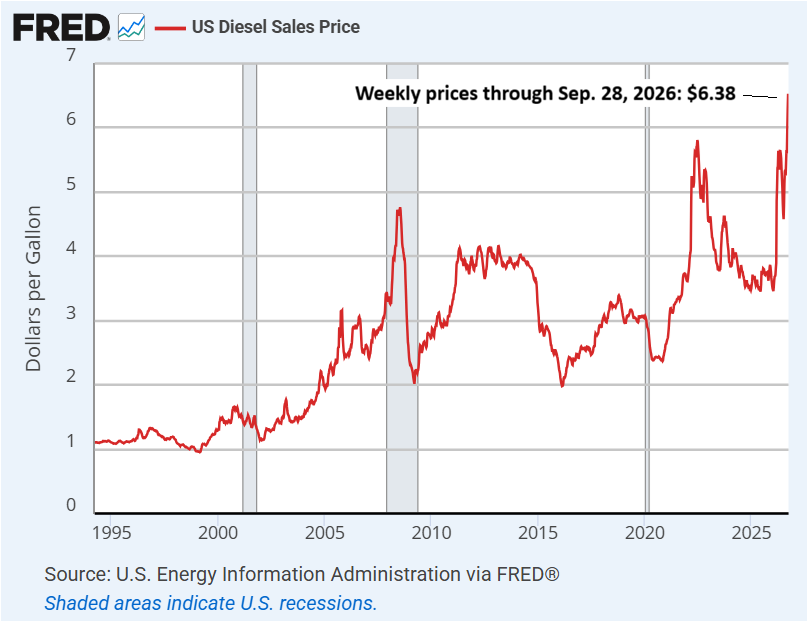
While crude oil exports have largely recovered, supplies of refined fuel remain constrained by refinery outages and conflict-related disruptions. The resulting pressure on diesel prices can amplify inflation, as higher transportation and freight costs ripple through supply chains and ultimately raise consumer prices. That’s a concern because diesel prices remain close to record highs.
Another factor lifting yields is the AI buildout. The rapid development of infrastructure in this space is adding upward pressure to bond yields by stimulating investment, increasing energy consumption, and raising expectations for stronger growth and potentially stickier inflation. Adding to this concern is the idea that the forces driving higher infrastructure spending are relatively immune to higher interest rates. If so, that’s a problem for the Fed as it tries to tame inflationary pressures through tighter monetary policy.
“The problem for the Fed is that there is usually a built-in correction mechanism in the U.S. economy in which interest rates rise and at some point, the rate-sensitive parts of the economy, led by housing, slow down hard, and that then propagates to the rest of the economy,” said Ajay Rajadhyaksha, global chairman of research at Barclays. “But if a large part of the economy is just less rate sensitive and that is what is pushing the economy to grow faster, then the Fed, unfortunately, has to hurt the part of the economy that is more rate sensitive.”
Meanwhile, rising Treasury yields are spilling over into the corporate bond market. “Investors are increasingly demanding more compensation for taking on the corporate credit risk,” says James Reilly, a senior markets economist at Capital Economics.
The Federal Reserve may face a tougher challenge in pulling inflation closer to its 2% target. The central bank raised its policy-rate target range last month, and the bond market expects another hike, though not at this month’s FOMC meeting. Fed funds futures this morning estimate roughly a 78% probability that the Fed will leave rates unchanged on Oct. 28.
It remains to be seen whether the bond market will tolerate the Fed’s patience. Doves can point to the policy-sensitive 2-year Treasury yield for a measure of comfort. This widely followed rate that’s used as a proxy for Fed policy expectations continues to trade modestly below last week’s peak.
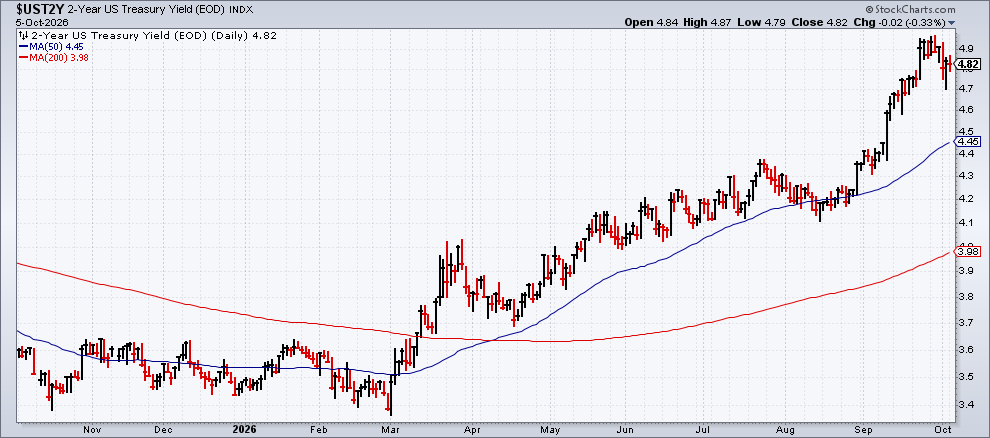
The market will focus on tomorrow’s release of Fed minutes for fresh clues about the next move for the central bank. As for the market, if the 2-year yield breaks above its recent trading range, that would signal that investors’ patience with the Fed’s patience has evaporated.
