US consumer inflation’s annual pace slowed more than expected in November, the Labor Department’s Bureau of Labor Statistics said. Headline CPI dipped to a 2.7% increase vs. the year-ago level while core CPI fell to 2.6%, a four-year low. Some analysts raised doubts about the numbers, citing the disruption in data collection due to the government shutdown. “The report wasn’t just noisy and full of gaps, it provided a downwardly biased perspective of inflation,” said Gregory Daco, chief economist at EY-Parthenon. “The downward bias stemmed from the carry-forward methodology that assumed an unchanged price index in October for all surveyed data – imparting a downward bias to inflation dynamics.”
Foreign Bonds On Track To Outperform US Fixed Income In 2025
Echoing the strong run in foreign equities in 2025, bond markets ex-US are also having a good year. Using a set of ETFs to track the major international buckets of fixed-income securities shows across-the-board outperformance over a popular US benchmark through Wednesday’s close (Dec. 17).
Macro Briefing: 18 December 2025
Business inflation expectations in December remained steady at a 2.2% pace for the year-ahead outlook, according to the Atlanta Fed’s latest survey data. The current estimate is relatively middling for the range of results reported in 2025.
Weak Payrolls Trend Highlights Emerging Risk For The Economy
The delayed payrolls reports finally arrived, but the news is mixed, at best. The Labor Department said that sharp swings in hiring unfolded in October and November. Looking through the monthly volatility suggests that hiring is slowing, slipping to a pace that’s raises a warning flag for the economic outlook in early 2026.
Macro Briefing: 17 December 2025
US payrolls rebounded moderately in November after posting a sharp decline in October, the Labor Dept. reports. The October slide was largely due to federal government employees leave jobs after accepting buyouts from the Trump administration’s DOGE initiative. Meanwhile, the unemployment rose to 4.6%, a four-year high. “The US economy is in a hiring recession,” Heather Long, chief economist at the Navy Federal Credit Union, wrote on X.
Risk-On Market Signals Persist Ahead Of US Economic Reports
The resumption of US economic reports continues this week with two key updates for November: payrolls report and consumer inflation. Analysts will be closely watching how markets react.
Macro Briefing: 16 December 2025
US homebuilder sentiment edged up in December, but continues to reflect negative sentiment about the market outlook. Builder confidence for newly built single-family homes is 39 this month, well below the neutral 50 mark. “The recent easing of monetary policy should help builder loan conditions at the start of 2026,” said NAHB Chief Economist Robert Dietz. “However, builders continue to face supply-side headwinds, as regulatory costs and material prices remain stubbornly high. Rising inventory also has increased competition for newly built homes.”
US Economic Updates This Week Will Help Clear The Data Fog
Lingering effects from the government shutdown continue to blur economic analysis, but two reports scheduled this week will provide markets with some much-needed clarity on how the fourth-quarter is unfolding.
Macro Briefing: 15 December 2025
US 30-year Treasury yield starts the trading week at its highest level in more than three months. The long-bond rate, the most inflation-sensitive maturity, closed up on Friday at 4.84%, the highest since early September.
Best Of Book Bits 2025: Part I
Another year (nearly) over and so it’s time again to look back on the Book Bits columns of 2025 and highlight the volumes that caught your editor’s eye for one reason or another. As usual in this year-end review, we’ll feature ten books that appeared on these pages during the course of the year. We’ll start with five today, followed by the balance in a week. Happy reading!
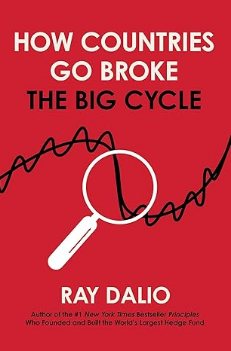
● How Countries Go Broke: The Big Cycle
Ray Dalio
Review via Inc.
Billionaire investor Ray Dalio, who founded Bridgewater Associates, the largest hedge fund in the world, is warning that the debt situation in the United States is approaching a “death spiral” that could eventually threaten the entire U.S. economy.
In his new book, How Countries Go Broke: The Big Cycle, Dalio joins a growing chorus of financial experts and billionaires who have been sounding the alarm about government debt levels. The book comes as a report from the Congressional Budget Office released Wednesday found that Donald Trump’s budget bill would add $2.4 trillion to national debt, which currently stands at $36.9 trillion. The problem, Dalio said, is “urgent.”