The selling of the 10-year Treasury Note (and the corresponding rise in yield) since December 31 is still just a blip, but is it a blip of things to come?
The 10-year’s yield closed yesterday’s session at roughly 2.5%. Yes, that’s still historically low, although it’s up from the 2.04% low touched last month. Noise, perhaps, although some of the noise of late sends a suspicious mind wandering.
Monthly Archives: January 2009
TALKING ABOUT ASSET ALLOCATION ON THE INSIDE VIEW PODCAST
The year just passed put many investment strategies to the test, including asset allocation and diversification. Indeed, virtually all the major asset classes suffered in 2008. What, if anything, does that say about asset allocation and the concept of owning multi-asset class portfolios? Did asset allocation stumble? Or did it live up to expectations despite the turmoil?
In today’s edition of The Inside View, we posed those questions and more to Richard Ferri, founder and CEO of Portfolio Solutions, a fee-only investment advisor in Troy, Michigan that specializes in designing and managing portfolios for individuals and small institutions using index funds and ETFs—at a charge of just 25 basis points. Rick is a respected authority on asset allocation and index-based investing. He’s written several books on these and related subjects, such as All About Asset Allocation and The ETF Book. To hear Rick’s take on asset allocation these days, including his reasoning for why it’s still the foundation for prudent investing, take a listen…
AN OLD STORY…WITH LEGS
It’s an old story, but it’s getting worse and so ignoring the 800-pound elephant in the room is getting tougher by the month.
Deficits and debt are mounting and changing the trend won’t be easy. We can debate if the U.S. will muster the intestinal fortitude necessary to even slow the pace of red ink’s ascent, much less reverse it. But in terms of absolute and relative levels of debt on the country’s balance sheet, the future looks assured, as a growing chorus of observers warn.
That includes a fresh advisory from the St. Louis Fed. The title says it all: Deficits, Debt and Looming Disaster: Reform of Entitlement Programs May Be the Only Hope. “For the fiscal year 2008, the federal government’s deficit totaled $455 billion, the largest ever for a single year,” Michael Pakko, an economist at the bank, writes. “In the final days of the fiscal year, which ended Sept. 30, the total federal debt rose above $10 trillion for the first time.”
REASSESSING FAIRY TALES
The U.S. stock market is on track to deliver its worst decade of performance on a calendar-basis since the record keeping began on such things, we’re told. Shocking as that is, it’s not the end of the world, although it does reveal a few things about what’s been happening in equities (and the collective mind of investors) over the years.
“Unless there’s a significant rally in 2009, the 2000s will prove to be the worst performing US stock market decade ever, actually losing money for the first time,” writes Ron Surz of PPCA Inc. (an investment analytics/software firm) in a research note today. “It will take a whopping 40% return in 2009 to make investors whole for the decade.”
WHAT A YEAR IT WAS!
Two-thousand-and-eight is gone—and good riddance. But the blowback will be with us for some time, on a number of fronts. And that starts with reviewing the previous 12 months.
As our first table below shows, red ink was spread far and wide in 2008 in almost everything other than cash and bonds. Otherwise, double-digit losses were the rule last year. But if we look at the monthly tally for December, the view looks decidedly better. REITs, in particular, rebounded sharply last month, surging nearly 18% in December.
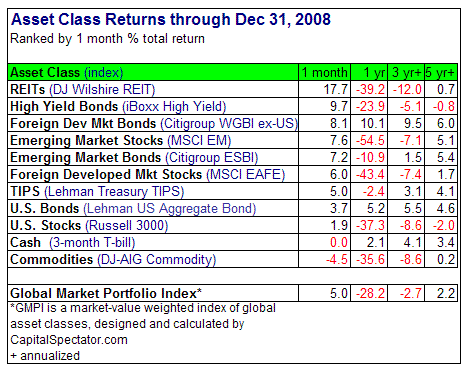
Most of the other asset classes followed suit, albeit with lesser although still robust gains for the month. The exceptions are cash and commodities. It’s too soon to tell if the worst is over or if the rally is merely a fleeting affair in an ongoing bear market. But given the extent and breadth of the carnage, it’s tempting to think that maybe, just maybe, positive returns await in asset classes other than cash.