Oil prices are climbing again and are approaching the highs reached during the early stages of the Iran conflict. The latest advance reflects growing concerns about renewed conflict in the Middle East, fueled by reports that the U.S. and Israel may resume military action against Iran after the midterm elections. Regardless of the trigger, a breakout to new highs in oil would be an unwelcome development for financial markets at a time when inflation risks remain elevated.
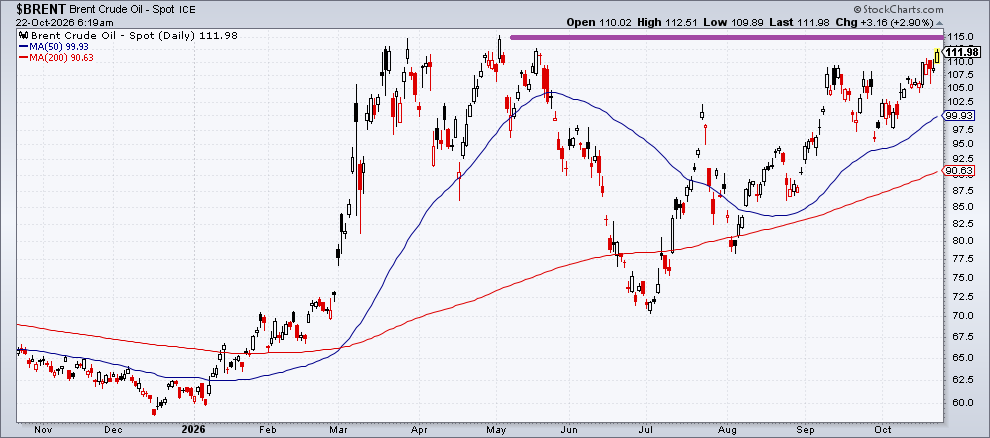
The price of Brent crude, the international benchmark, rose Wednesday to nearly $112 a barrel, just a few dollars below the $115 peak reached in early May. A decisive move above that level would renew inflation concerns and likely reverberate across global stock and bond markets.
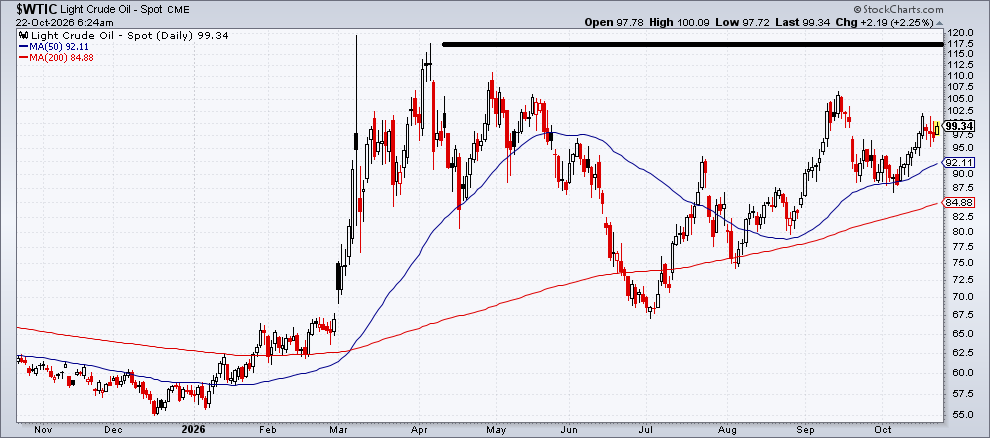
The U.S. benchmark remains further below its previous high but has also trended higher in recent weeks. WTI crude traded around $99 a barrel on Wednesday, well below its early-April peak above $117.
Even without a new round of U.S. or Israeli strikes on Iran, the Middle East conflict continues to pose significant risks for energy markets. One of the biggest concerns is the escalating Houthi campaign against Saudi Arabia and its energy infrastructure. On Wednesday, the Iran-backed group launched a drone strike on a Saudi oil field and hit a civilian airport.
The incidents are part of a broader escalation that has intensified pressure on Saudi Arabia in recent weeks and raised concerns that the conflict could spread more widely across the region.
Separately, Iran’s Revolutionary Guard said seven vessels were hit and caught fire in and around the Persian Gulf and Strait of Hormuz today.
“The risk of escalation in the Middle East is back at the forefront of investors’ minds,” said Van Luu, global head of solutions strategy at asset manager Russell Investments.
The latest rally in oil prices comes despite rising crude exports from the region. Reuters, citing Kpler data, reports that flows through the Strait of Hormuz increased to 11.7 million barrels per day this month from 9.75 million in September. October volumes represent about 82% of pre-war levels and are well above April’s low of roughly 1 million barrels per day.
The fact that oil is rising despite the recovery in exports suggests that traders are increasingly focused on future supply risks rather than current supply conditions. Markets appear to be assigning greater weight to the possibility of disruptions to production, transportation, or energy infrastructure across the region.
Reports of a potential new U.S.-Israeli offensive against Iran could add further upward pressure on oil prices. The New York Times, citing U.S. officials, reports that Washington and Jerusalem are preparing contingency plans for a post-midterm military campaign that could target Iran’s energy, nuclear, and military assets.
On another front, traders are monitoring reports that Iranian floating oil storage has effectively been depleted as a result of the U.S. naval blockade. The disappearance of that supply, along with the apparent halt in deliveries to China, suggests that a key source of oil is no longer available to the global market, increasing the risk of tighter near-term supply conditions.
“There’s no more oil to discharge to China anymore,” Kpler’s head of crude oil analysis, Homayoun Falakshahi, tells The Wall Street Journal.
Investors are struggling to determine whether these developments mark the beginning of another sustained energy-price surge or simply the latest bout of geopolitical volatility. Markets may continue to look past the headlines, as they have for much of the conflict. But a decisive move above previous oil-price highs would be harder to dismiss, raising the risk that stocks and bonds begin pricing in a larger geopolitical risk premium as the conflict drags on.
Is Recession Risk Rising? Monitor the outlook with a subscription to:
The US Business Cycle Risk Report