The war with Iran appears headed for some form of negotiated settlement. The main uncertainties are timing and details. But the longer the conflict lasts—and the longer the Iranian regime survives—the outlook, as interpreted by The Capital Spectator, is that a decisive US victory, defined as capitulation by Tehran, becomes less likely. The implication of this forecast: a messy, uneven, and protracted period of de‑escalation on the road to a settlement may continue to disrupt the global economy for the foreseeable future.
My reasoning starts with the near certainty that Iran will not prevail, at least not militarily. The US, by contrast, has the capacity for a decisive win, but forcing Iran to surrender unconditionally would almost certainly require a land invasion with a significant number of US troops—a decision that seems unlikely. The experience of the wars in Afghanistan, Iraq, and Vietnam suggests that the political price would be too high.
The US can still inflict more damage on Iran from the air, using missiles and air power. But after more than seven weeks of bombing by the US and Israel, the shock value is fading. A deeper and broader array of attacks on Iran’s infrastructure would surely be painful and push the economy to the brink of collapse. But Iran’s leaders view the conflict as an existential battle, and it is unclear whether extending the air campaign would change minds at this late date within the regime—at least not to the point of full and complete capitulation.
As a result, the path of least resistance suggests that facts on the ground will favor a negotiated settlement, eventually. A mix of factors will influence the timing and shape of an agreement, but the key pressure points are internal constraints related to resources and public sentiment, which are creating very different breaking points for each side.
For the US, the prestige and perception of America’s ability to project power and shape geopolitical outcomes in the Middle East are hanging in the balance. Another pressure point is the global economy. The closure of the Strait of Hormuz has driven energy prices sharply higher. Iran has demonstrated that it can restrict exports through this chokepoint and that the US has limited means of preventing that constraint.
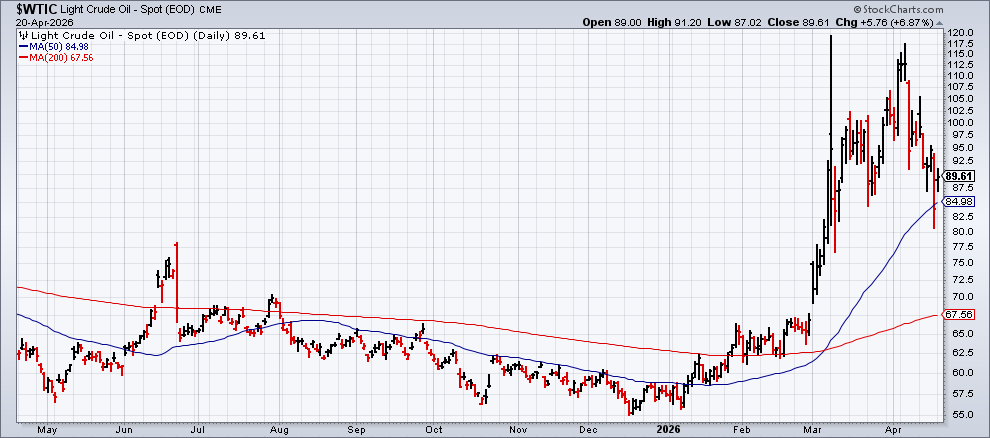
A major pressure point on Iran is economic exhaustion. The regime may be able to shut down energy exports from the Gulf, but the US can extend that chokehold to Iranian oil exports, the country’s main source of revenue.
The calculus comes down to: who will blink first.
A potentially influential factor is China, the largest buyer of Iranian oil—more than 80% of Iran’s exports in 2025, amounting to roughly 13–14% of China’s total seaborne crude imports, according to Kpler. China also remains a major trading partner of the US, despite tariffs, leaving both countries with significant shared economic interests. In other words, China has substantial ties to both sides and could play a role in negotiations, albeit behind the scenes. A key issue to watch: Beijing may have enough leverage to keep Tehran at the table, even as it continues to support Iran’s ability to resist US demands.
For the US, the question is when political and economic pressures will persuade President Trump that a negotiated settlement is the only realistic path. A related uncertainty: How far the US is willing to go in inflicting additional damage on Iran’s economy? The administration may be inclined to escalate, but doing so is not cost‑free. If an overt military campaign resumes, energy exports will remain restricted, which threatens to keep inflation higher and economic growth lower for longer, in the US and around the world.
In the end, neither side may get the victory it wants, only the compromise it can live with.
Is Recession Risk Rising? Monitor the outlook with a subscription to:
The US Business Cycle Risk Report