U.S. Treasury yields dropped sharply on Thursday, marking the largest one-day decline in recent history and reigniting questions about whether rates have peaked. At the center of the debate over where the bond market goes from here is the tension between the outlook for inflation vs. growing concerns about economic growth and geopolitical risk.
One explanation for the decline in yields is that investor sentiment is shifting toward the safe-haven appeal of Treasuries, which is beginning to outweigh inflation concerns and reverse the rise in yields that peaked earlier this month. Under this view, inflation pressures linked to the conflict with Iran, which has kept energy prices elevated, are expected to weigh on economic activity and eventually reinforce a disinflationary trend. As investors increasingly embrace this outlook, demand for bonds is reviving, lifting fixed-income prices and pushing yields lower.
Whether this interpretation proves correct, or premature, should become clearer in the days and weeks ahead. If investors are increasingly focused on potential for slower growth and the disinflationary implications of weaker economic activity, Treasury yields may continue to trend lower. If, however, inflation concerns tied to elevated energy prices and geopolitical risk reassert themselves, the recent decline in yields could prove temporary. Watching key Treasury rates will help determine whether the inflation trade is beginning to unwind or merely taking a pause.
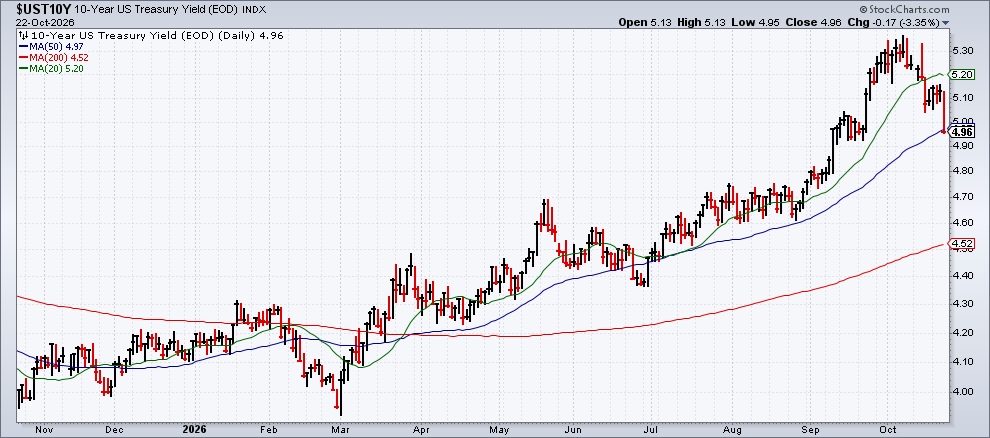
Let’s start with the benchmark 10-year yield, which closed below 5.0% yesterday for the first time in a month. The drop was unusually steep, but for now it is still plausible that the slide represents little more than noise. The uptrend that began with the outbreak of the war remains intact. Note that the 10-year yield briefly fell below its 50-day moving average in late June before rebounding and climbing to new highs. Trading activity in the days ahead should help clarify whether a similar pattern will emerge or if the benchmark rate is poised to continue testing lower support levels.
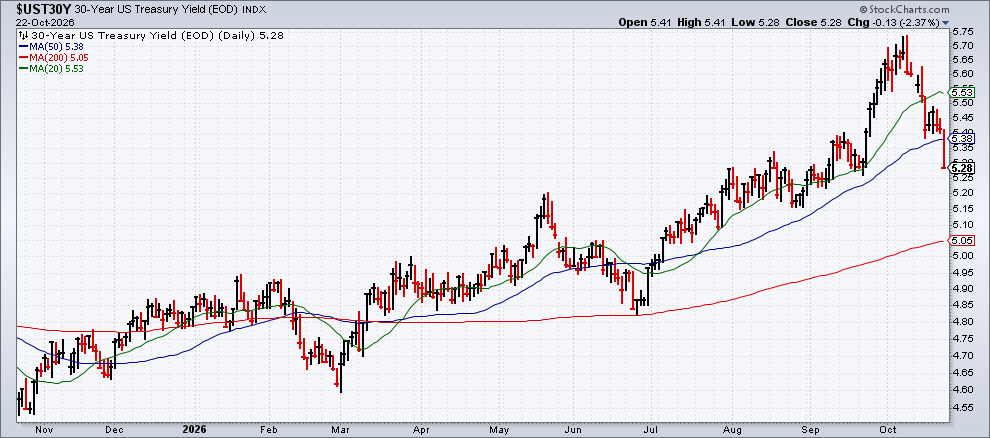
The posture of the 30-year yield, the maturity most sensitive to inflation expectations, offers a stronger case for reading the latest market action as a tilt toward the safe-haven narrative. The long bond’s yield fell well below its 50-day moving average yesterday, putting it in position to test the support level established in September.
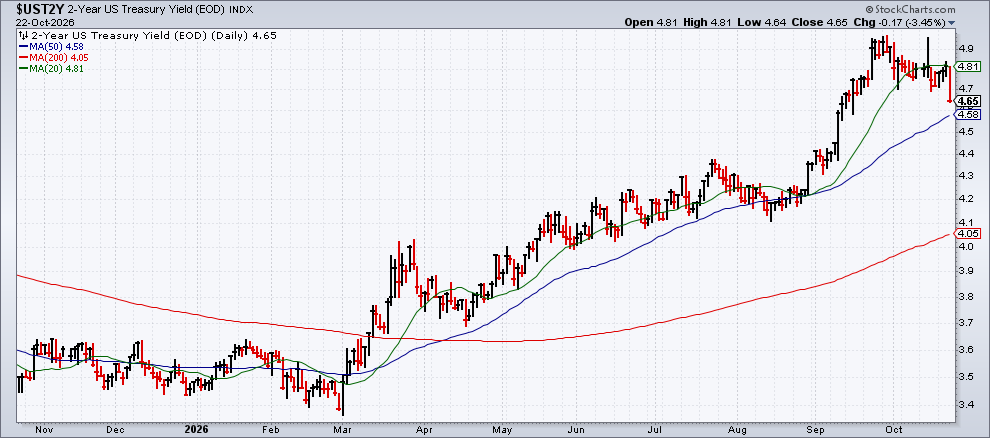
The policy-sensitive 2-year yield, by contrast, has been relatively resilient, holding above its 50-day moving average. The comparatively modest decline to 4.65% on Thursday from a recent peak near 4.95% suggests that the market continues to price in another rate hike by the Federal Reserve. A further decline in the 2-year yield would weaken confidence in that outlook, which could, in turn, encourage additional declines in longer-term rates.
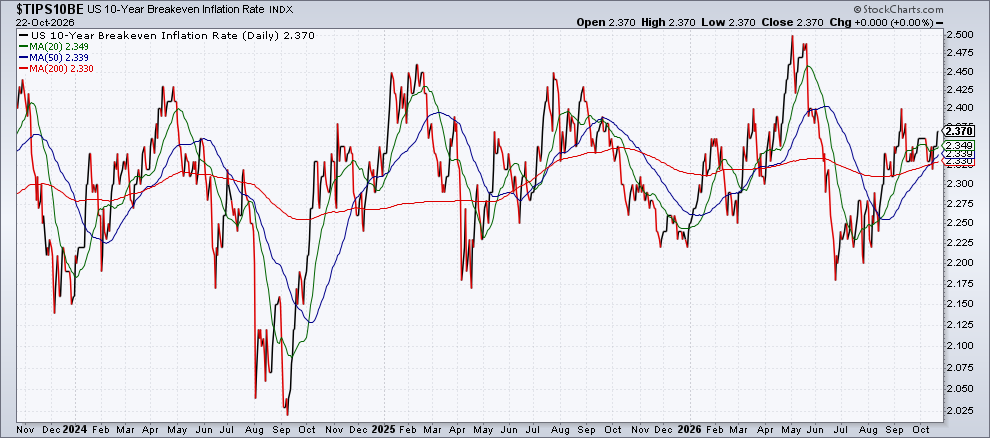
The market’s implied inflation forecast also deserves close attention. The 10-year breakeven inflation rate, calculated as the difference between the nominal Treasury yield and its inflation-indexed counterpart, remains near the middle of its range relative to recent years. Although the spread has widened since the summer, yesterday’s reading of 2.37% is close to its average level in recent history. If the breakeven rate rises from here and approaches its recent peak of roughly 2.50%, it would suggest that investors are pricing in higher inflation expectations, strengthening headwinds for the bond market. By contrast, if the 10-year breakeven rate, along with its five-year counterpart, remains range-bound or moves lower, it would lend support to the safe-haven narrative that favors bonds and drives yields lower.
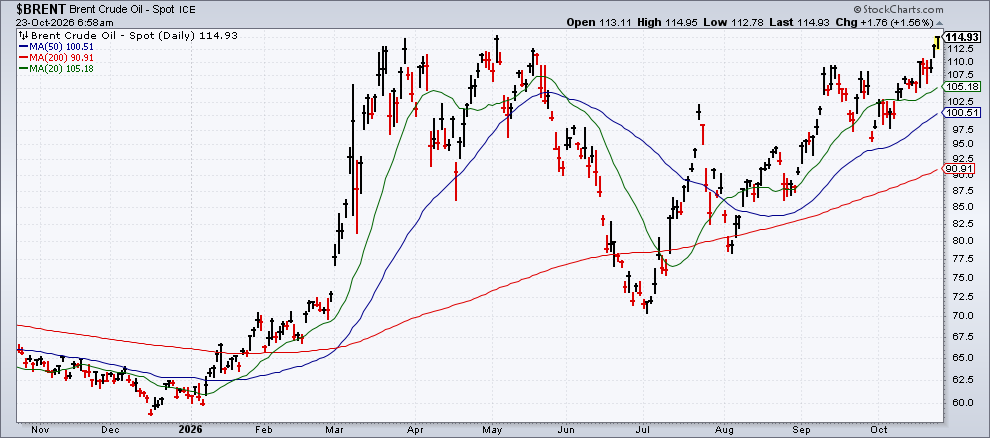
Energy prices will remain a key factor for the inflation outlook and, by extension, near-term sentiment in the bond market. One potential warning sign is the renewed rise in crude oil prices. Brent, the international benchmark, appears poised to set a new high since the Iran conflict began. A decisive and sustained move above $115 a barrel could trigger a renewed bond selloff, pushing yields higher.
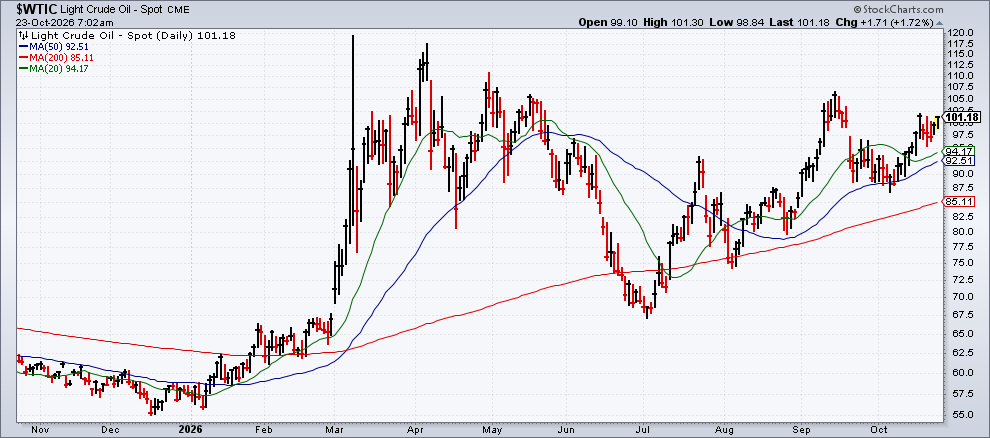
The picture is somewhat less concerning for WTI, the U.S. benchmark, which remains further below its wartime peak. Even so, a continued advance in WTI from the current level would likely put a floor under bond yields in the near term and perhaps spark a rebound in rates.
It’s worth noting that a powerful relief rally in bonds could emerge if the Iran crisis is resolved or begins to evolve into a relatively stable stalemate. For now, however, such a shift in geopolitical risk appears unlikely in the near term as Washington and Tehran issue new threats. As a result, the bond market is likely to remain caught between two competing narratives: persistent inflation driven by energy prices and geopolitical tensions, or slowing growth that ultimately reinforces disinflationary forces and supports lower yields.
Is Recession Risk Rising? Monitor the outlook with a subscription to:
The US Business Cycle Risk Report