 ● The Singularity Paradox: Bridging the Gap Between Humanity and AI
Anders Indset and Florian Neukart
Summary via publisher (Wiley)
The Singularity Paradox: Bridging the Gap Between Humanity and AI is a comprehensive exploration of how the fusion of biology, neuroscience, and artificial intelligence can lead to the creation of Artificial Human Intelligence (AHI) as a conscious response to the unconscious development of superintelligence. Singularity highlights the tension between the boundless possibilities of technological advancement and the potential loss of human autonomy, control, and relevance. AHI may become essential in navigating this singularity and preventing the severe consequences that could arise. The convergence of humanity and technology, shedding light on the ethical, social, and scientific implications of this transformation is taken on with a fresh perspective.
Category Archives: Uncategorized
Total Return Forecasts: Major Asset Classes | 02 MAY 2025
The long-run expected total return for the Global Market Index (GMI) ticked higher in April, inching up to an annualized 7.0% from the previous month’s 6.9%. The analysis is based on three models (defined below) for GMI, a global benchmark that’s based on a market-value weighted mix of the major asset classes (excluding cash).
Macro Briefing: 2 May 2025
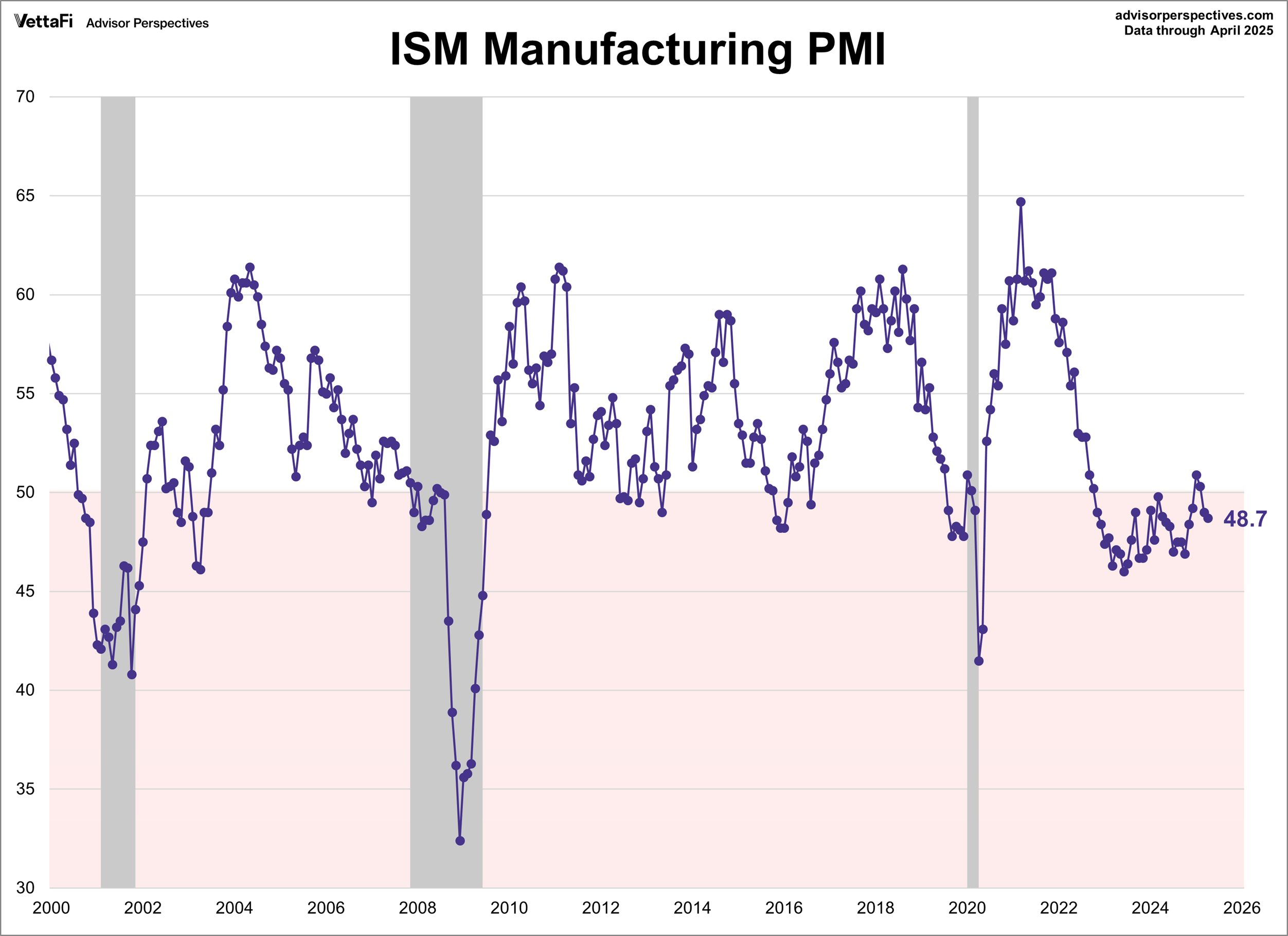
US manufacturing activity contracted for a second month in April, according to the ISM Manufacturing Index, a survey-based profile of the sector. The weak reading indicates that the brief recovery, following a 26-month run of contraction, has faded. “Demand and output weakened while input strengthened further, conditions that are not considered positive for economic growth,” said Institute for Supply Management chair Timothy Fiore said in a press release.
Major Asset Classes | April 2025 | Performance Review
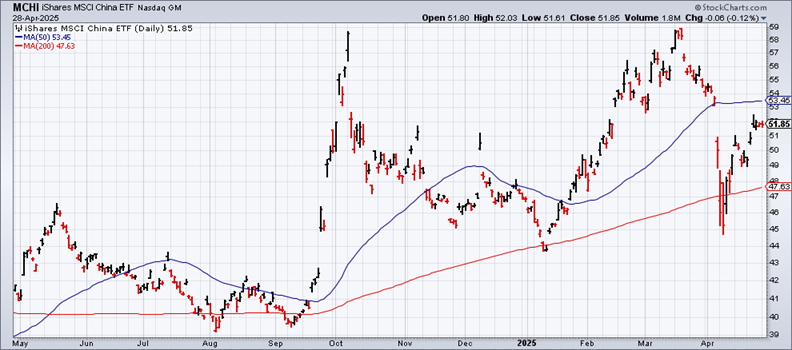
Foreign markets continued to rally in March, leading returns for the major asset classes and extending a bullish trend for foreign assets in 2025, based on a set of ETFs. US stocks, US junk bonds and US property shares, by contrast, continued to lose ground. The big loser in March: commodities, which posted an unusually steep decline.
Macro Briefing: 1 May 2025
US economic activity contracted in the first quarter, according to the government’s preliminary estimate of GDP for the January-through-March period. A key factor in the 0.3% decline was a surge of imports, which subtract from growth for calculating GDP. Imports reduced the headline pace of growth by nearly 5 percentage points, the biggest negative impact on record for this category (since 1947). “Maybe some of this negativity is due to a rush to bring in imports before the tariffs go up, but there is simply no way for policy advisors to sugar-coat this. Growth has simply vanished,” said Chris Rupkey, chief economist at Fwdbonds.

Foreign Equities Continue To Outperform As US Stocks Lag In 2025
International diversification remains a winning strategy for equities so far this year. Rallies in all the primary regions of the world continue to lead US shares, which are still posting a loss year for 2025, based on a set of ETFs through Tuesday’s close (Apr. 29).
Macro Briefing: 30 April 2025
US job openings fell in March to the lowest level since September. Openings are still above the pre-pandemic level, but the latest slide extends a decline that’s been unfolding since peaking in March 2022.

US Growth Expected To Slow In Tomorrow’s Q1 GDP Report
US economic activity looks set to post a sharply softer rate of growth in Wednesday’s initial estimate of first-quarter GDP, based on the median nowcast for several estimates compiled by CapitalSpectator.com.
Macro Briefing: 29 April 2025
Treasury Secretary Bessent on Monday said Beijing is responsible for reaching a trade agreement with the US. “I believe that it’s up to China to de-escalate, because they sell five times more to us than we sell to them, and so these 120%, 145% tariffs are unsustainable.”
US Stocks And Real Estate Shares Are Still Losers In 2025
In a turbulent year for financial markets, US equities and real estate investment trusts are still bearing the brunt of the selling so far in 2025, based on a set of ETFs through Friday’s close (Apr. 25). By contrast, the rest of the major asset classes are still posting gains year to date.