Federal Reserve Governor Chris Waller says there’s still a case for staying patient before deciding whether it’s time to raise interest rates. The open question is whether the bond market will endorse that caution — or start pricing in a faster pivot.
In a speech yesterday, Waller argued that keeping rates steady still has merit. “Recent data suggest we are finally seeing some signs of disinflation.” He added: “If this continues in the data due over the next two weeks, I would be inclined to support holding the target for the federal funds rate at its current setting.”
He also advised that next week’s update on the Consumer Price Index could be a determining factor. “If the incoming data for August show this improvement has been fleeting, then it may be appropriate to raise the policy rate when the FOMC meets on September 15 and 16.”
Intentional or not, Waller’s comments helped shift market expectations to a coin flip for the rate decision later this month. At the start of the week, Fed funds futures were pricing in a 60%-plus probability that the central bank would lift its target rate by a ¼ point — an estimate that’s now split roughly 50/50.
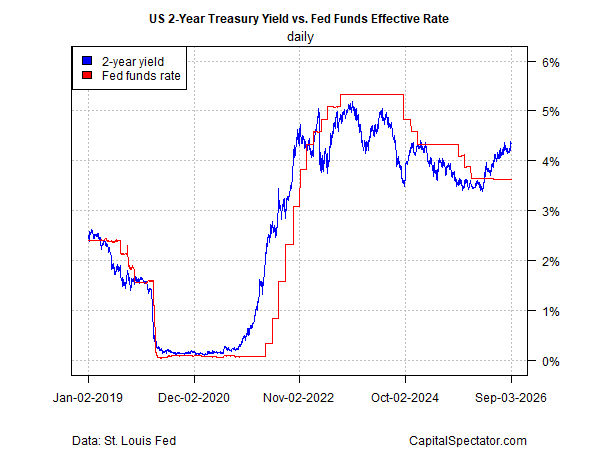
The policy‑sensitive 2‑year Treasury yield fell yesterday but remains far above the effective Fed funds rate (EFF) — a sign that this corner of the bond market is still confident that a rate hike is near.
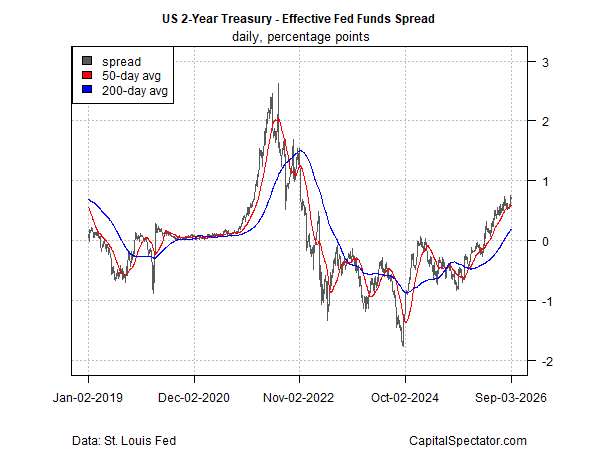
Looking directly at the 2‑year/EFF spread highlights the Treasury market’s growing confidence in anticipating tighter policy. The gap between the 2‑year yield and EFF has been positive and rising since early March, a trend that underscores the extent of hawkish sentiment among bond traders. The spread fell to 71 basis points yesterday, likely in reaction to Waller’s comments, but it remains close to Tuesday’s level, which marked a four‑year high.
Despite the bond market’s cautious outlook for pricing relief, the case for expecting disinflation in the economy is reasonable — at least under certain assumptions. But as long as the Iran conflict continues and blocks energy exports from the Gulf, any disinflation impulse will be muted.
Counting on the economy to cool as a source of disinflation may also be premature. The Atlanta Fed’s GDPNow model nowcasts that economic output will rebound sharply in next month’s third‑quarter GDP report to a strong 4.7% annualized increase — far above Q2’s modest 1.5% rise.
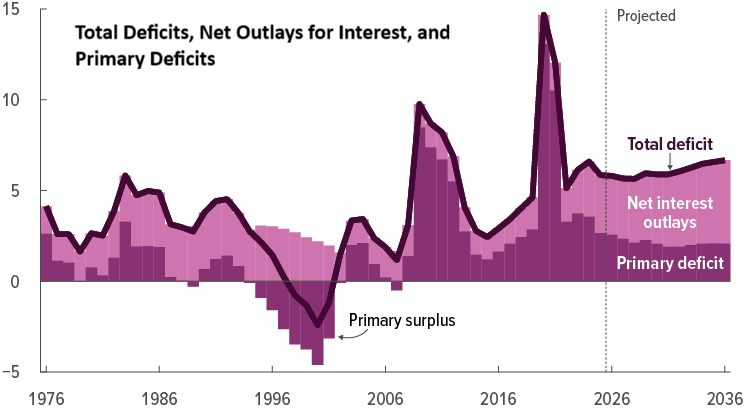
Meanwhile, the recent rise in longer‑term yields reflects risks beyond the Iran war and includes heightened concerns about U.S. government debt, which topped $40 trillion for the first time last month. National debt as a percentage of GDP is still well below the peak reached during the Covid pandemic, but the Congressional Budget Office projects that the debt‑to‑GDP ratio will continue rising in the years ahead, increasing from the current 5.8% to 6.7% in 2036.
Adding to the bond market’s concern is the near‑zero appetite in Washington for fiscal reform. With the mid‑term elections on the horizon, it’s a safe bet that the hard questions surrounding government spending and taxes will remain conveniently ignored between now and Nov. 3.
A surprisingly tame inflation report next week might put a lid on further increases in Treasury yields for the immediate future. But as the upward trend in the 10‑year yield suggests, the mix of factors driving the repricing of risks won’t be easily or quickly resolved.
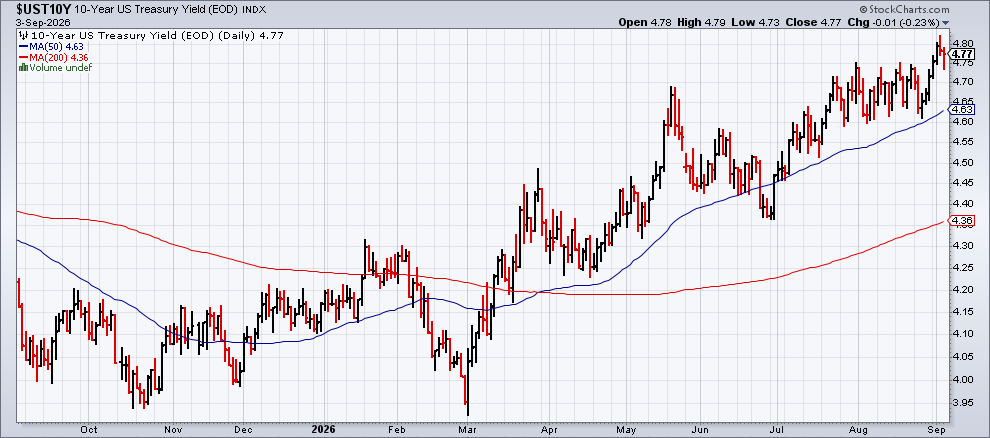
A sharp, sudden slowdown in the economy would change sentiment in the bond market, but that scenario appears unlikely in the near term. Meanwhile, if the August consumer price inflation data continue to show no relief on pricing pressure, Treasury yields are poised to push higher and set new multi‑year highs.
Waller may be preaching patience — but it’s not yet clear the bond market is ready to sit quietly through the sermon.
Learn To Use R For Portfolio Analysis
Quantitative Investment Portfolio Analytics In R:
An Introduction To R For Modeling Portfolio Risk and Return
By James Picerno
