How’s that three-factor model working out for ’ya?
The famous Fama-French model from the early 1990s that inspired investors to allocate a portion of their equity strategy to so‑called value and small‑cap stocks has had a rough ride in recent years. But the tide may finally be turning—or so one can argue based on year‑to‑date performances. The question is whether the recoveries are another short-run burst of strength that runs out of road, a scenario that’s played out several times in recent years.
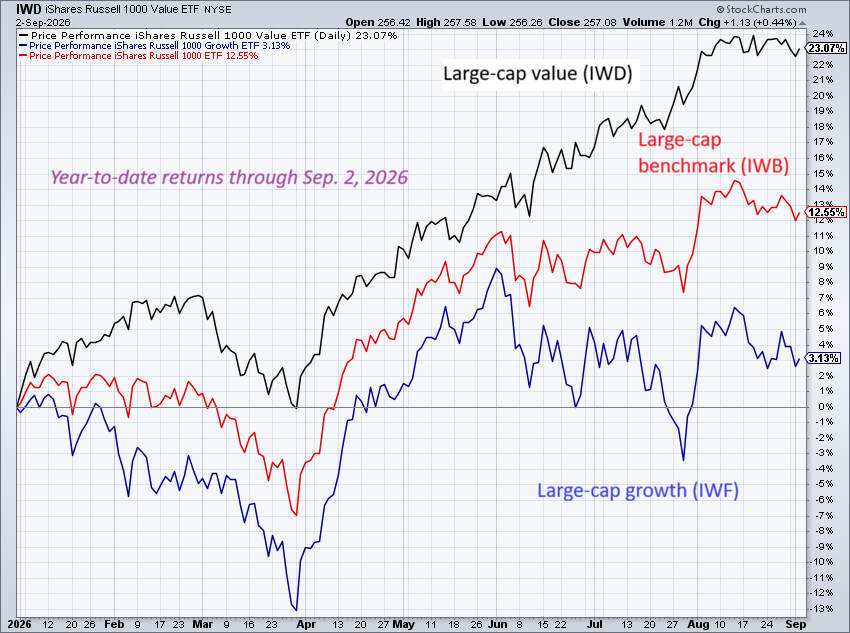
Value stocks (shares with relatively low valuations) and small companies are outperforming broad measures of market‑cap‑weighted indexes this year, according to a set of ETFs. Large‑cap value stocks have soared more than 23% so far in 2026 through Sept. 3, based on the iShares Russell 1000 Value ETF (IWD). That’s nearly twice the gain for the core large‑cap benchmark (IWB) and far ahead of the struggling large‑cap growth fund (IWF).
Small‑cap stocks are also outperforming large caps this year by a wide margin.
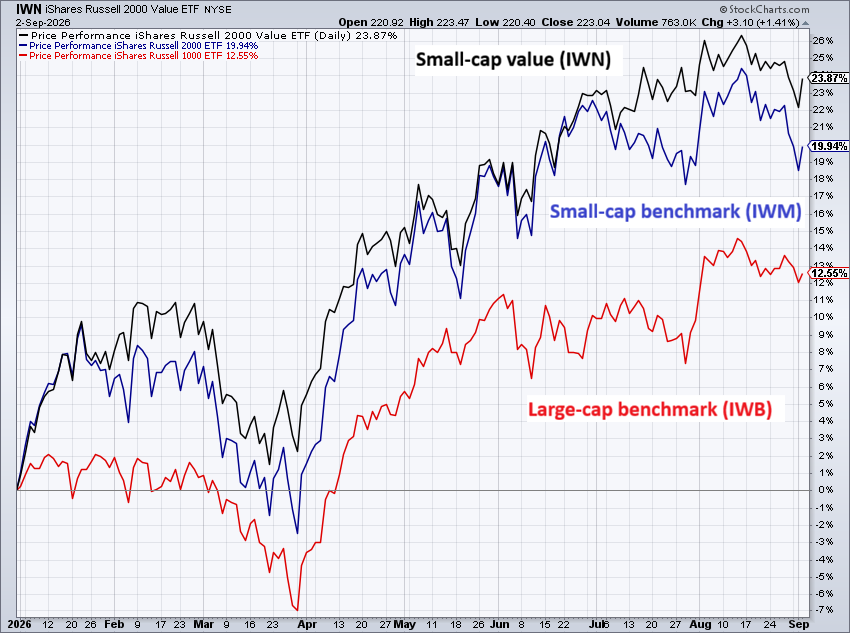
Has the long‑awaited renaissance in value and small‑cap shares finally arrived? Not so fast. There’s no denying that this year has rewarded these slices of the equities market with outsized returns. But considering the longer historical record still leaves room for debate.
Consider how a longer‑term view of these risk factors stacks up using a set of performance ratios. The main takeaway: small cap and value have enjoyed bursts of outperformance over the years, but the rebounds soon faded. No one knows if this time will be different, but for now there’s still a case for cautious optimism.
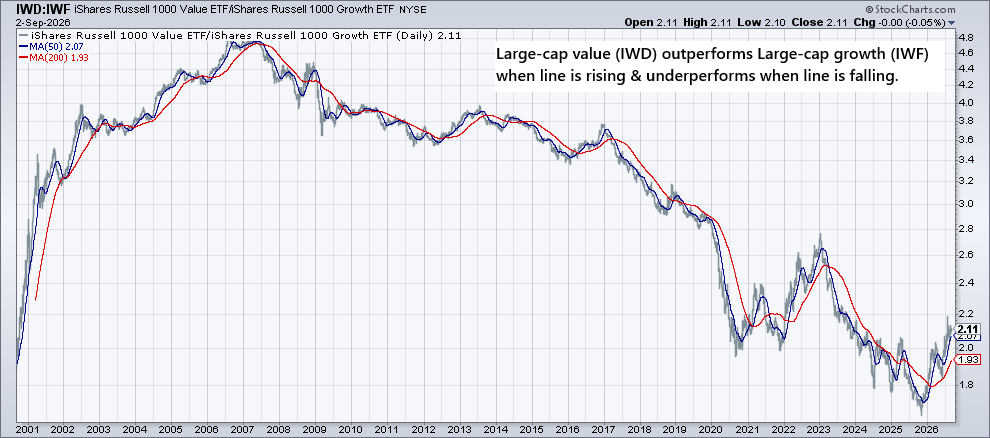
Let’s start with a ratio that compares large‑cap value (IWD) to large‑cap growth (IWF). When the line in the chart below is rising, value is outperforming (or underperforming when the line is falling). This year’s value rally looks like a significant break with the past. But short‑lived recoveries have come and gone over the years, ultimately giving way to the gravity that has prevailed for the past two decades: value loses ground in relative terms.
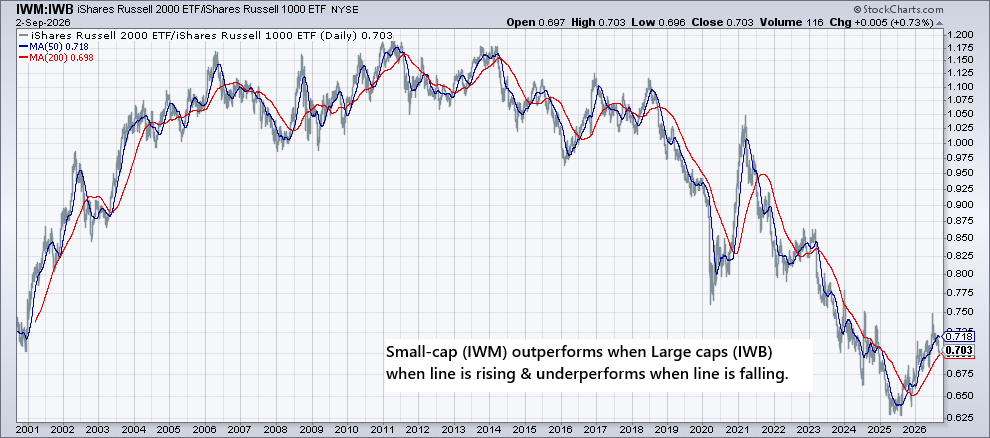
A similar profile applies for small caps versus large caps. It’s been a strong year for smaller stocks, but it’s unclear if the rally is one more false dawn.
But hope springs eternal (again) for these risk factors. The next several months could be crucial tests. As markets head into autumn, a variety of threats are lurking, including rising Treasury yields, the ongoing conflict with Iran, and a debate about whether AI‑driven enthusiasm has gone too far too fast.
If small cap and value can hold on to their relative gains, that would be a constructive setup for 2027. The acid test may arise in a broad market selloff, which could challenge the crowd’s capacity to keep the faith. No less important: on the other side of a significant correction, will value and small caps resume their lead and break the knee‑jerk reaction to favor growth and large caps?
Passing these tests would speak volumes. Hanging in the balance is what could be the final stand for the reliability of the three‑factor model and its implied recommendation to lean into small cap and value as a long‑term allocation.

My own experience shows this model fails when interest rates are extremely low. That specific economic scenario changes the expected performance significantly.
It tempting to ascribe the recent out-performance of the value sector to investors leaning away from the tech-heavy growth funds. Yet, surprisingly, this may not be the sole reason for the run-up in value. Rather, it appears instead that some tech stocks are now included in the value universe.
Vanguard, in their latest Market Perspectives, states: “The index that our largest passive value fund seeks to track has benefited from increased exposure to AI-related companies, particularly in semiconductors, as several technology firms have become valued attractively enough to meet the index’s inclusion requirements. In other words, AI is no longer solely a growth-stock story. Some of the companies helping drive innovation are increasingly becoming part of the value universe as well.”
DanM, excellent point.
–JP