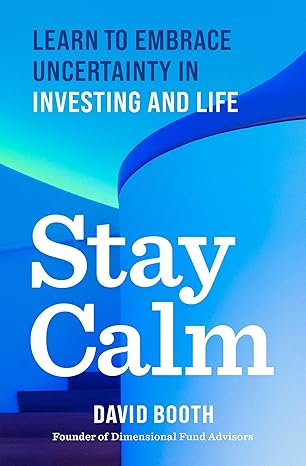
 ● Stay Calm: Learn to Embrace Uncertainty in Investing and Life
David Booth
Review via CBS News
Index investing pioneer David Booth has a simple message for people navigating volatile financial markets: Stay calm and keep investing.
Booth, a billionaire several times over whose Dimensional Fund Advisors manages $1 trillion, expands on that advice in a new book, “Stay Calm: Learn to Embrace Uncertainty in Investing and Life.” Part memoir and part investment guide, the book explains why investors should strive to accept the uncertainty inherent in the market rather than trying to outsmart it.
 ● The Architecture of Wealth: The Art and Science of Portfolio Construction
Andrew S. Clarke, et al.
Summary via publisher (Wiley)
The Architecture of Wealth: The Art and Science of Portfolio Construction, by experienced investment researchers Andrew Clarke and Nelson Wicas with portfolio manager Ganesh Suntharam, is an in-depth strategy guide for building a portfolio using techniques that reliably result in superior returns. In the book, the authors outline the theory underlying modern portfolio construction, from the development of modern portfolio theory in the 1950s and 1960s to recent developments in behavioral economics. They also discuss the trial-and-error and compromise necessary to translate theory into real-world investing decision. Finally, the authors explain the advanced methodological and analytical techniques that they’ve used for over three decades to identify promising investing opportunities.
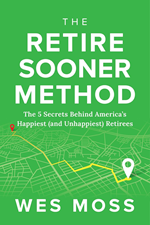 ● The Retire Sooner Method: The 5 Secrets Behind America’s Happiest (and Unhappiest) Retirees
Wes Moss
Essay by author via Forbes
Retirement planning has often been presented as a math problem: accumulate a certain nest egg, apply a withdrawal rate, and hope the numbers hold up for 25 or 30 years.
In my latest book, The Retire Sooner Method, I take a much broader view: Financial preparation remains essential, but our research suggests that a more fulfilling retirement may also depend on how people plan for purpose, relationships, health, and the daily structure of life after work.
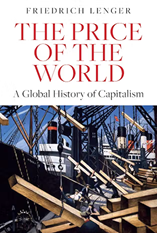 ● The Price of the World: A Global History of Capitalism
Friedrich Lenger
Summary via publisher (Polity)
Over the last 500 years, capitalism has produced a world that is highly interdependent and at the same time highly asymmetrical. These asymmetries were often established by violent means and are in many cases vigorously defended to this day. In his ambitious global history of capitalism, Friedrich Lenger charts the course of these developments, which have left no one unaffected – from the indigenous people of America to the silk weavers of Bengal. This is a story of flagrant wealth and extreme poverty, of violence and oppression, and of the relentless exploitation both of labour and of our planet, for which we are now paying the price.
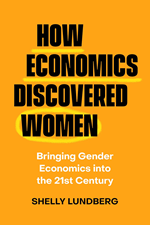 ● How Economics Discovered Women: Bringing Gender Economics into the Twenty-First Century
Shelly Lundberg
Summary via publisher (U. of California Press)
In the 1970s, as women started to enter the labor force in unprecedented numbers, economists began to examine their roles as economic actors. The result was the rise of gender economics, now a major subfield with powerful data and new methods comparing the economic lives of men and women. Yet despite decades of progress, many of the most consequential questions about gender inequality remain unresolved. In this bold and reflective book, renowned economist and demographer Shelly Lundberg argues that the problem is not a lack of evidence but a failure to challenge entrenched economic models and outmoded assumptions about markets and gender that have limited what the field can explain.
Please note that the links to books above are affiliate links with Amazon.com and James Picerno (a.k.a. The Capital Spectator) earns money if you buy one of the titles listed. Also note that you will not pay extra for a book even though it generates revenue for The Capital Spectator. By purchasing books through this site, you provide support for The Capital Spectator. Thank you!