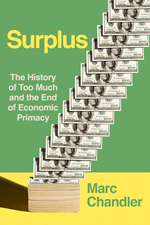
 ● Surplus: The History of Too Much and the End of Economic Primacy
Marc Chandler
Interview with author via Katheleen Hays Presents: Central Bank Central
Marc Chandler, the chief market strategist and managing director at Bannockburn Capital Markets, has been covering the currency markets for more than 25 years at some of the largest banks and custodians in the world. Now, as the groundbreaking end of the Bretton Woods Agreement is hitting more than half a century, Marc is zeroing in on what this has meant for global currency markets back then and where he sees the dollar heading next.
As he wrote in a recent piece, “Fifty-five years ago today, Nixon closed the gold window. The move was billed as temporary. It became permanent and launched the dollar into a half-centruy of dominance nobody in 1971 would have predicted. Now, on the anniversary, the cracks in that architecture are getting bigger than ever.”
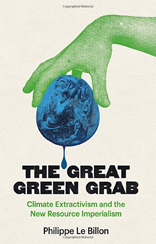 ● The Great Green Grab: Climate Extractivism and the New Resource Imperialism
Philippe Le Billon
Summary via publisher (Oxford U. Press)
The spiraling climate crisis demands a rapid shift away from fossil fuels. But most current approaches to decarbonization rely on a dramatic expansion of resource extraction–exacerbating environmental degradation and deepening global inequalities. This is the paradox of the so-called green transition. Philippe Le Billon offers a critical examination of the material and political underpinnings of climate change mitigation. Drawing on insights from political ecology, critical geography and environmental justice, he interrogates the rise of ‘climate extractivism’: the opening up of new resource frontiers and the construction of infrastructure megaprojects in the name of sustainability.
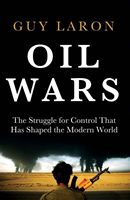 ● Oil Wars: The Struggle for Control that has Shaped the Modern World
Guy Laron
Summary via publisher (Yale U. Press)
For the last twenty years, Putin’s Russia has weaponised its vast resources of oil and gas, trying to use them to dominate Ukraine and, later, with growing audacity, challenge NATO itself. But this is far from the first time this tactic has been used. Over the last 150 years, access to oil and gas has repeatedly been used as a tool to gain an advantage. Looking at the global picture—including Vietnam, India, and Egypt—Guy Laron charts the connection between oil, gas, and political power from the First World War through the Cold War to the crises of today. He shows how political actors leveraged their power through key chokepoints: production sites, pipelines, and even refineries. Whilst at the same time, companies lobbied states to block rivals and eliminate competition. This has been a high-stakes game over the controlling heights of the world economy that continues until this very day.
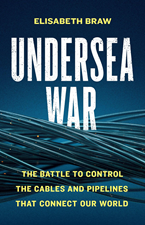 ● Undersea War: The Battle to Control the Cables and Pipelines That Connect Our World
Elisabeth Braw
Review/Q&A via Ars Technica
Despite the expansion of Starlink and other communications satellite services, most of the world’s Internet traffic still travels through subsea cables crisscrossing the ocean floors. Those fiber-optic cables coexist with a network of oil and gas pipelines and submarine power cables—and all these crucial links connecting countries and continents now face growing sabotage risks as gray-zone warfare and open conflicts have become widespread.
The rising risks to the world’s invisible infrastructure beneath the waves are the main subject of a new book by Elisabeth Braw, a senior fellow at the Atlantic Council who leads the Threats to the Global Maritime Order Initiative. Her book, titled Undersea War, explores the modern rise in suspicious incidents in which ships dragging their anchors for unusually long periods have cut or damaged undersea cables and pipelines, from the Baltic Sea to the Pacific Ocean.
Please note that the links to books above are affiliate links with Amazon.com and James Picerno (a.k.a. The Capital Spectator) earns money if you buy one of the titles listed. Also note that you will not pay extra for a book even though it generates revenue for The Capital Spectator. Thank you!