Jensen Huang’s return to Nvidia may be a triumph of business over politics, but investors are still debating a bigger question: can it reignite enthusiasm for the technology sector? As the company at the center of the AI revolution, Nvidia has been a critical driver of the bull market, making the sector’s next move an important signal for the broader stock market outlook.
If tech can regain its footing, it could provide an important clue about the bull market’s staying power. For now, however, trend profiles remain tilted against the bulls, with several key technology industries, along with the broader sector, still struggling to stabilize after the recent bout of turbulence.
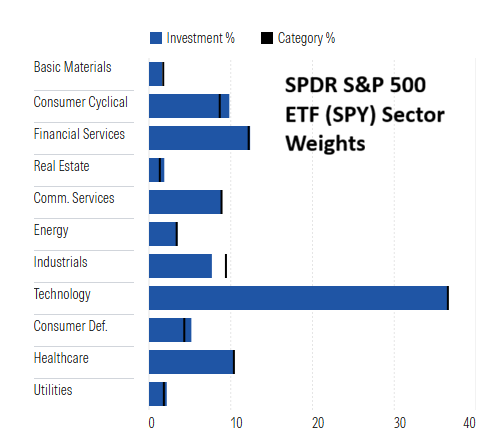
The fortunes of tech, or lack thereof, continue to cast a long shadow over the market due to the sector’s sizable footprint. Roughly 36% of the market-cap-weighted SPDR S&P 500 ETF (SPY) is allocated to technology, according to Morningstar.com, making it by far the market’s most influential sector. It may be tempting to focus on opportunities elsewhere, but broad market indexes linked to market values will have a difficult time mounting a sustained recovery if tech remains under pressure.
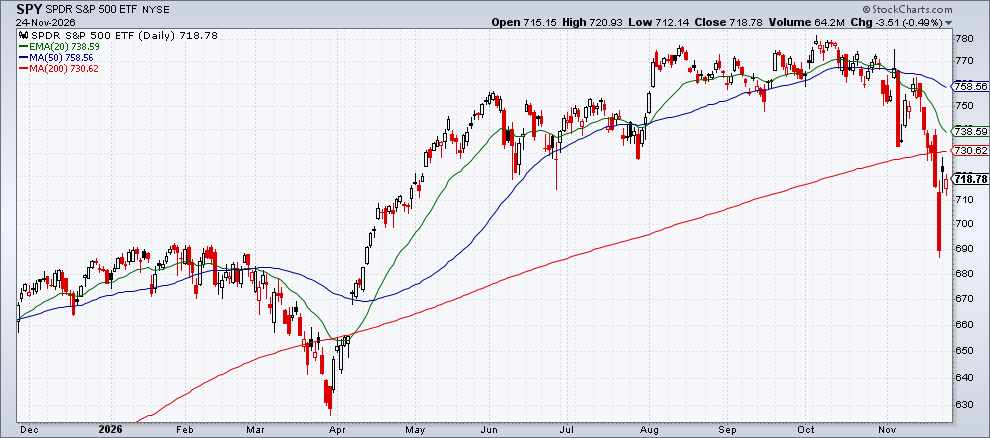
The tech-induced damage to SPY’s trend profile remains an evolving story as the ETF struggles to regain a bullish bias. The key question is whether the latest downturn will lead to another quick snapback, as it did several times over the last few years. No one knows, but the longer SPY remains below its 200-day moving average, the odds for a rapid rebound fade.
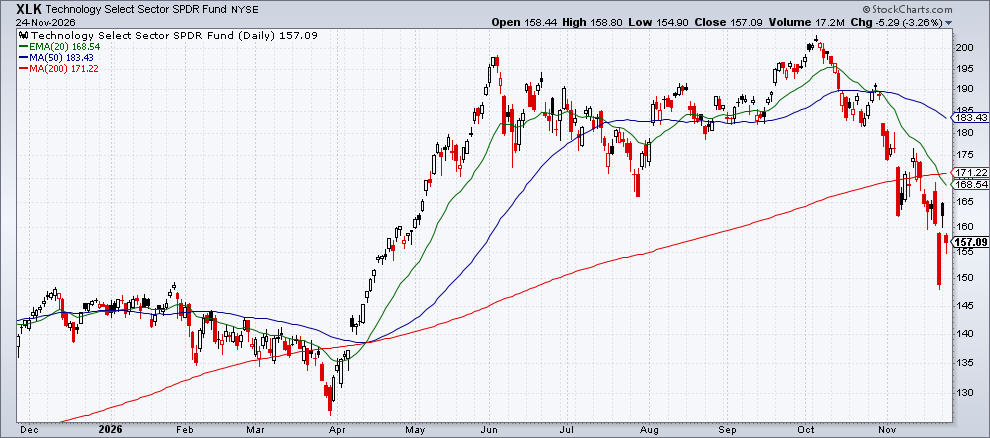
The same logic applies to technology stocks. Unfortunately for the bulls in this corner, the trend profile looks considerably more challenging after yesterday’s decline. The Technology Select Sector SPDR ETF (XLK) appears poised to continue testing downside support, strengthening the case that the fund may be entering, if not a bear market, then at least a prolonged period of range-bound trading.
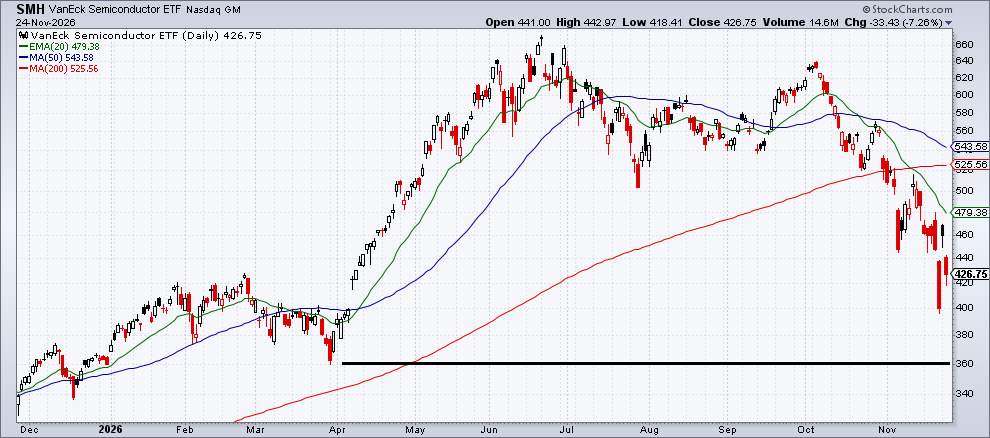
Several key industries within the technology sector are also caught in a challenging trend environment. Semiconductor stocks (SMH) remain weak and may soon test an important support level. A break below the previous low around $360 would suggest that even a trading-range outlook may be overly optimistic in the near term.
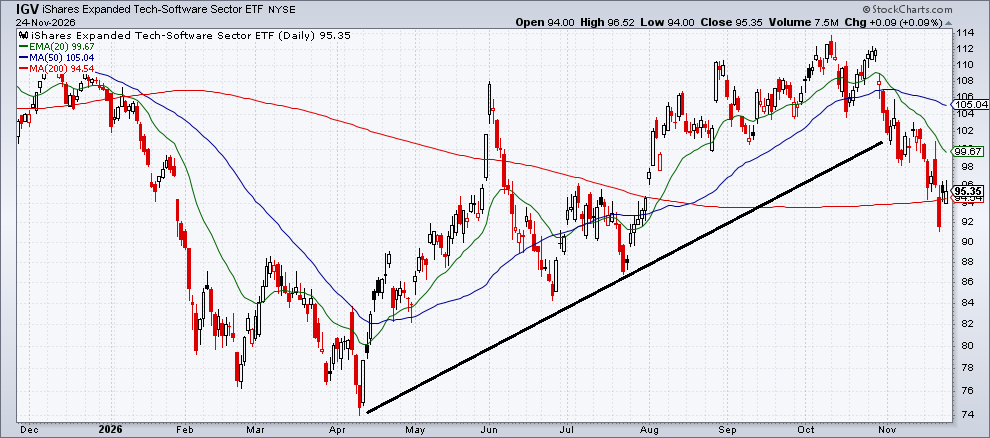
Software stocks (IGV) have held up somewhat better, but the broader weakness across technology has been difficult to overcome. Unless IGV begins to stabilize soon, the near-term outlook for the industry will continue to deteriorate.
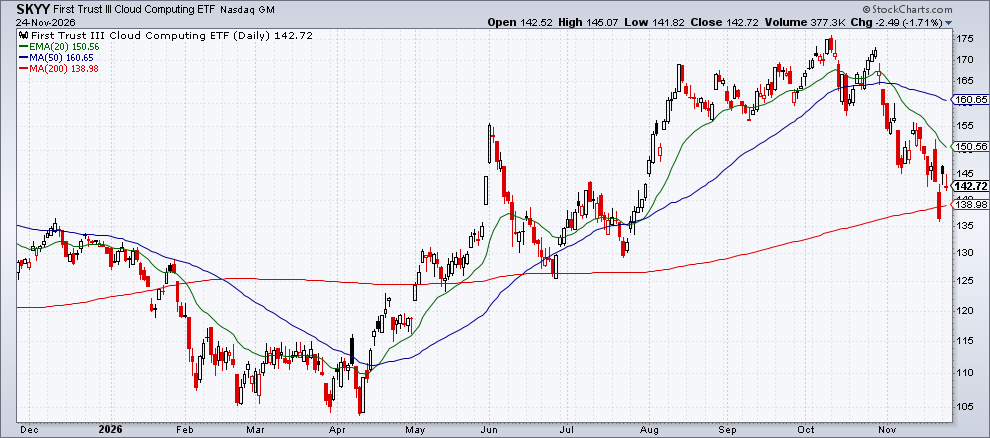
A similar story applies to cloud-computing stocks (SKYY), which are increasingly flirting with a bearish rollover.
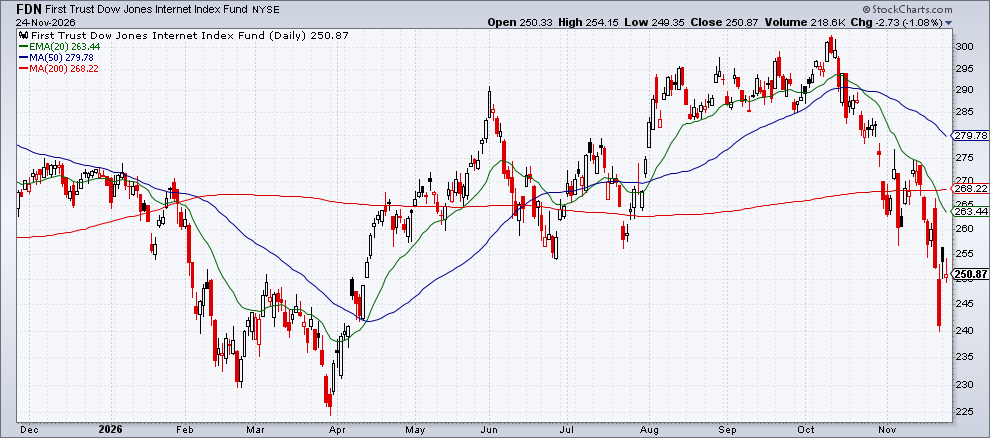
The trend profile looks somewhat darker still for internet commerce and services stocks (FDN), a useful proxy for the broader digital economy that includes many of the market’s most influential growth companies.
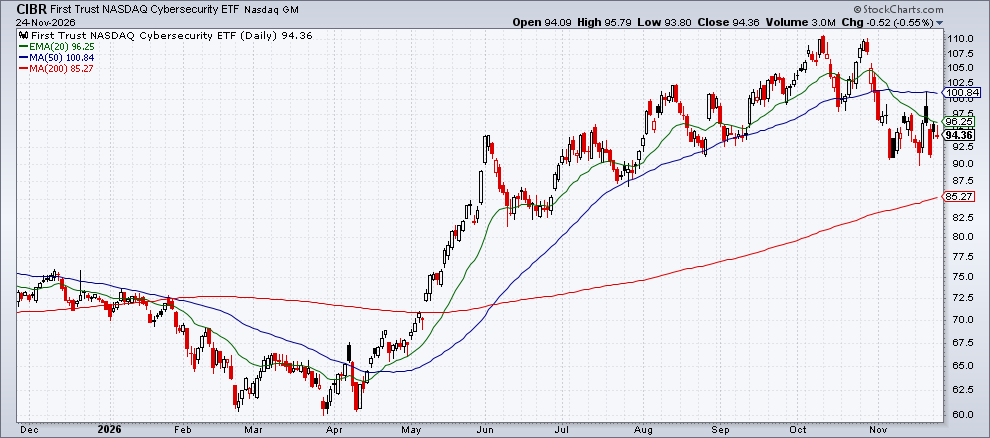
One of the more encouraging areas within technology is cybersecurity in terms of the trend profile. The damage here has been relatively limited, based on the behavior of the First Trust Nasdaq Cybersecurity ETF (CIBR). The fund’s pullback from its October peak has been modest so far, which is not entirely surprising. The AI-fueled world of cyber threats is just beginning and remains a growth industry, a dynamic that may provide cybersecurity firms with a degree of defensive resilience relative to other corners of the technology sector.
As for a more direct play on artificial intelligence, investors remain noticeably cautious, based on the Global X Artificial Intelligence & Technology ETF (AIQ). Like many of its technology counterparts, sellers continue to dominate as the fund tests lower support levels.
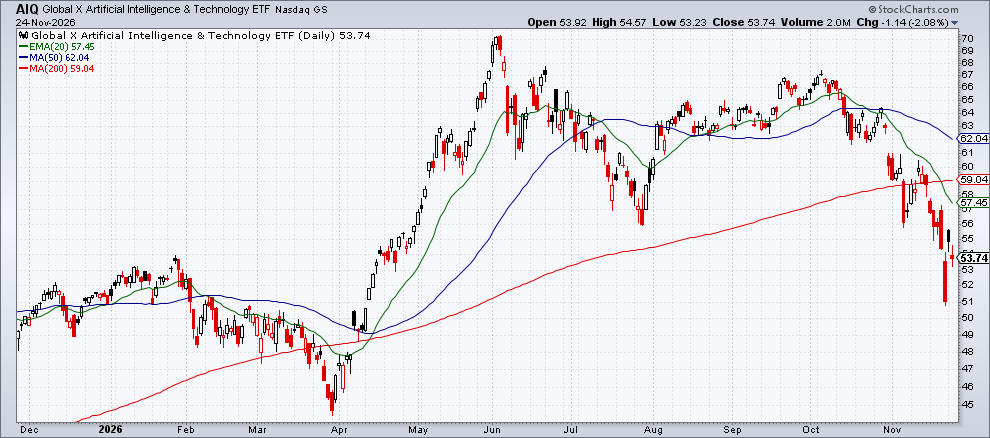
Overall, the evidence suggests that technology is in the midst of a transition phase rather than preparing for an immediate return to leadership. The sector is still searching for a durable bottom as investors digest the excesses of the AI-driven advance and reassess growth expectations across several key industries.
History suggests that corrections ultimately lay the groundwork for the next period of expansion by resetting valuations, sentiment, and positioning. The challenge for investors is that the process can take longer than expected. While the long-term case for innovation-driven growth remains intact, it is not yet clear whether the sector is nearing the end of a healthy correction or entering a more prolonged consolidation before the next leg higher can begin. For now, patience and close attention to trend stabilization metrics are warranted.
