
Edited by Edward L. Glaeser, et al.
Summary via publisher (Chicago University Press)
The past three decades have been characterized by vast change and crises in global financial markets—and not in politically unstable countries but in the heart of the developed world, from the Great Recession in the United States to the banking crises in Japan and the Eurozone. As we try to make sense of what caused these crises and how we might reduce risk factors and prevent recurrence, the fields of finance and economics have also seen vast change, as scholars and researchers have advanced their thinking to better respond to the recent crises.
Continue reading
Category Archives: Book Bits

Book Bits | 18 March 2017
 ● Investment Traps Exposed: Navigating Investor Mistakes and Behavioral Biases
By H. Kent Baker and Vesa Puttonen
Summary via Amazon
Investment Traps Exposed helps investors and investment practitioners increase their awareness about the external and internal traps that they or their clients can encounter. Baker and Puttonen not only examine common investing mistakes, behavioral biases, and investment traps that can ensnare investors, affect sound judgment, and reduce wealth but also delve into how to recognize and avoid these errors. The authors present objective advice, case studies, and empirical evidence in a user-friendly manner and also nudge investors to stay on the right course to mitigate misbehaving.
Continue reading

Book Bits | 11 March 2017
 ● Rational Investing: The Subtleties of Asset Management
By Hugues Langlois and Jacques Lussier
Summary via publisher (Columbia University Press)
Many investors believe that success in investing is either luck or clairvoyance. In Rational Investing, finance professor Hugues Langlois and asset manager Jacques Lussier present the current state of asset management and clarify the conundrum of luck versus skill. The core of Rational Investing is a framework for smart investing built around three performance drivers: balancing exposure to risk factors, efficiently diversifying bad luck, and taking advantage of relative mispricings in financial markets. With clear examples from model multi-asset-class portfolios, Langlois and Lussier show how to implement performance drivers like institutional investors with access to extensive resources, as well as nonprofessional investors who are constrained to small-scale transactions.
Continue reading

Book Bits | 25 February 2017
●  The Vanishing Middle Class: Prejudice and Power in a Dual Economy
By Peter Temin
Summary via publisher (MIT Press)
The United States is becoming a nation of rich and poor, with few families in the middle. In this book, MIT economist Peter Temin offers an illuminating way to look at the vanishing middle class. Temin argues that American history and politics, particularly slavery and its aftermath, play an important part in the widening gap between rich and poor. Temin employs a well-known, simple model of a dual economy to examine the dynamics of the rich/poor divide in America, and outlines ways to work toward greater equality so that America will no longer have one economy for the rich and one for the poor.
Continue reading

Book Bits | 18 February 2017
 ● Fed Up: An Insider’s Take on Why the Federal Reserve is Bad for America
By Danielle DiMartino Booth
Commentary by author via CNBC
It’s no longer a secret that an abundance of anger is churning among many working men and women who feel they’ve been excluded by the current economic recovery and the longest span of job creation in postwar history. The funny thing about a sense of abandonment is that more often than not, anger follows.
What too few Americans appreciate is how directly the inability to say “no” at the Fed has determined their station in life. But that’s just the case. The Fed directly impacts a slew of the most important decisions we make — the values we instill in our children, the things we buy and how they are financed and how we best prepare for what follows after a lifetime of laboring in the trenches.
Continue reading

Book Bits | 11 February 2017
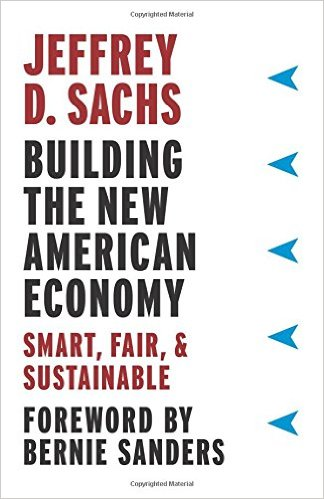 ● Building the New American Economy: Smart, Fair, and Sustainable
By Jeffrey D. Sachs
Summary via publisher (Columbia University Press)
In this passionate and powerful book—part manifesto, part plan of action—the renowned economist Jeffrey D. Sachs offers a practical strategy to move America, seemingly more divided than ever, toward a new consensus: sustainable development. Sustainable development is a holistic approach that emphasizes economic, social, and environmental objectives in shaping policy. In focusing too much on economic growth, the United States has neglected rising economic inequality and dire environmental threats. Now, even growth is imperiled.
Continue reading

Book Bits | 28 January 2017
● A Man for All Markets: From Las Vegas to Wall Street, How I Beat the Dealer and the Market
By Edward O. Thorp
Summary via publisher (Random House)
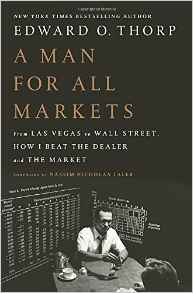 The incredible true story of the card-counting mathematics professor who taught the world how to beat the dealer and, as the first of the great quantitative investors, ushered in a revolution on Wall Street. A child of the Great Depression, legendary mathematician Edward O. Thorp invented card counting, proving the seemingly impossible: that you could beat the dealer at the blackjack table. As a result he launched a gambling renaissance. His remarkable success—and mathematically unassailable method—caused such an uproar that casinos altered the rules of the game to thwart him and the legions he inspired.
Continue reading

Book Bits | 21 January 2017
● Big Agenda: President Trump’s Plan to Save America
By David Horowitz
Summary via publisher (Humanix)
Donald Trump’s victory in the 2016 election was more than a historic upset. It was the beginning of a major political, economic, and social revolution that will change America — and the world. One of the nation’s foremost conservative commentators, New York Times bestselling author, and a mentor to many of Donald Trump’s key advisers, David Horowitz presents a White House battle plan to halt the Democrats’ march to extinguish the values America holds dear.
Continue reading

Book Bits |14 January 2017
● A Good Disruption: Redefining Growth in the Twenty-First Century
By Martin Stuchtey, et al.
Summary via publisher (Bloomsbury)
Disruptive technology is one of the defining economic trends of our age, transforming one major industry after another. But what is the true impact of such disruption on the world’s economies, and does it really have the potential to solve global problems such as low growth, inequality and environmental degradation? The provocative answer is that such disruption could indeed solve many of these issues, but that it won’t… at least, not on its current trajectory.
Continue reading

Book Bits |5 November 2016
● The Econocracy: The Perils of Leaving Economics to the Experts
By Joe Earle, et al.
Summary via publisher (Manchester University Press)
One hundred years ago the idea of ‘the economy’ didn’t exist. Now, improving the economy has come to be seen as perhaps the most important task facing modern societies. Politics and policymaking are conducted in the language of economics and economic logic shapes how political issues are thought about and addressed. The result is that the majority of citizens, who cannot speak this language, are locked out of politics while political decisions are increasingly devolved to experts. The econocracy explains how economics came to be seen this way – and the damaging consequences. It opens up the discipline and demonstrates its inner workings to the wider public so that the task of reclaiming democracy can begin.
Continue reading
