The yield premium on the U.S. 10-year Treasury note surged in October as investors demanded greater compensation for inflation and fiscal risks. The rise in the benchmark yield pushed the gap between the market rate and The Capital Spectator’s estimate of fair value to its widest level in more than two years.
The fair-value estimate for the 10-year Treasury yield is based on three models. Their average estimate edged up to 4.35% in October (red line in chart below). The market yield climbed much faster, averaging above 5.0% last month for the first time since 2002. As a result, the benchmark rate stood roughly 79 basis points above its estimated fair value, marking the largest premium in more than two years.
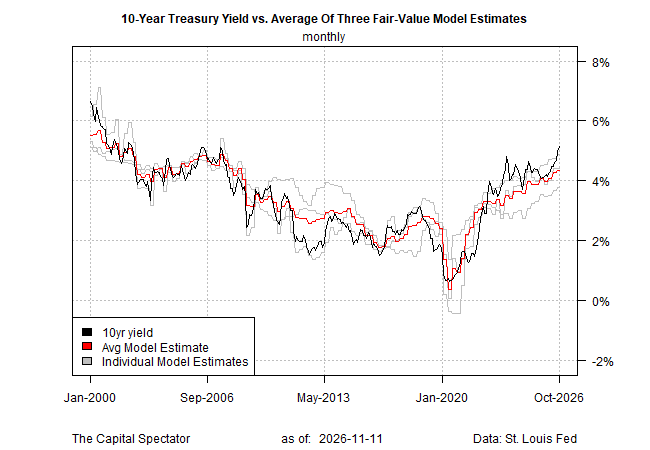
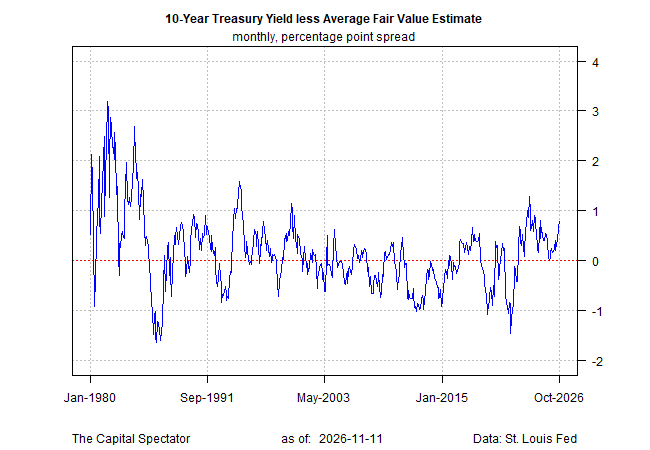
The premium is still trending higher, but remains well below the previous peak: roughly 1.28 percentage points in October 2023.
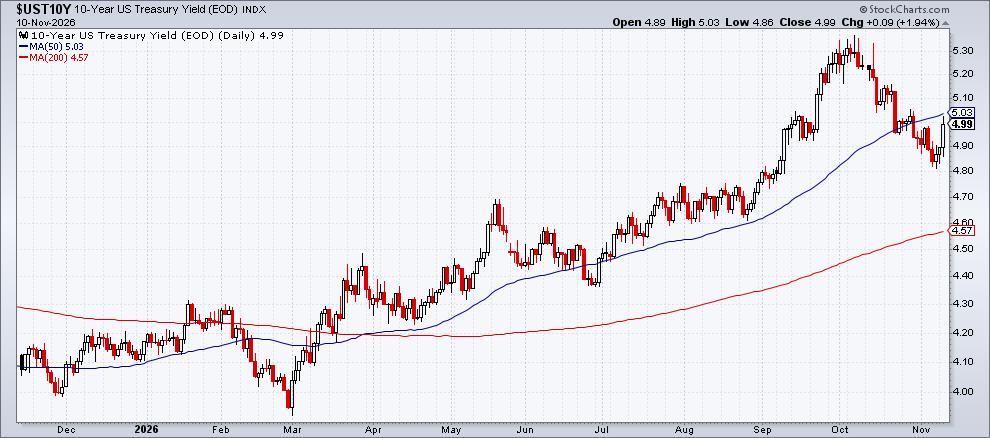
A bond-market rebound earlier this month, which pushed Treasury yields lower, a shift that hinted that the recent surge in rates may have peaked. But hotter-than-expected October inflation data released yesterday revived concerns that price pressures remain stubbornly persistent, triggering a sharp jump in the 10-year Treasury yield. The benchmark rate remains slightly below the 5% threshold, as of Tuesday’s close.
As a result, the odds still appear tilted toward a wider yield premium in the months ahead. A sustained reversal is likely to require clear evidence that inflation has peaked and is moving decisively lower. The latest Consumer Price Index (CPI) data suggest that such a turning point is several months out at a minium.
Inflation remained stubbornly high in October, reinforcing expectations that the Federal Reserve will keep interest rates elevated. Although the CPI report did not include year-over-year figures because last year’s government shutdown disrupted data collection, a rough estimate based on available data suggests annual inflation accelerated to 4.0% for headline CPI, the highest reading since May. Core CPI rose to an estimated 2.9%, a 13-month high.
There are, however, signs that inflation pressures could ease in the months ahead. Recent reports suggest tensions surrounding the Iran conflict may be de-escalating, a development that could help stabilize energy markets and reduce upward pressure on oil prices.
U.S. officials struck a more conciliatory tone this week as diplomatic efforts gained momentum. Secretary of State Marco Rubio argued that economic pressure is proving effective and that there is currently no need for further military action: “The economic campaign against Iran is so devastating that right now there is no need for major combat operations,” he said. Meanwhile, President Donald Trump cited “positive momentum” toward resolving the conflict.
Encouraging, but until investors gain confidence that inflation is moving sustainably lower, the bond market will likely retest recent highs for Treasury yields. Progress toward ending the Iran conflict could ease that pressure, but after months of setbacks, markets are likely to remain cautious until a durable resolution emerges and persists over weeks if not months.
More immediately, the latest inflation report is also likely to reinforce the Federal Reserve’s hawkish stance. Fed funds futures this morning are pricing in a roughly 90% probability that the central bank will raise its target interest rate again by a quarter point at the Dec. 9 FOMC meeting.
