Fears of an AI bubble have lingered on Wall Street for some time, and the Nvidia turmoil that erupted into public view last week appeared to open the door to a long-feared reckoning. Yet the initial market response has been relatively restrained. Although investors are debating whether the mild reaction reflects resilience or merely the calm before a larger storm, broad equity indexes have so far avoided a meaningful selloff.
Judging by the S&P 500 Index, the market is taking the Nvidia shock largely in stride. CEO Jensen Huang resigned last week following reports of extramarital affairs, including allegations involving a Chinese spy. The stock plunged, and the fallout has weighed heavily on some corners of the technology ecosystem, particularly infrastructure and data-center-related companies. Even so, the S&P 500 continues to trade within a relatively narrow range and remains close to its early October record high.
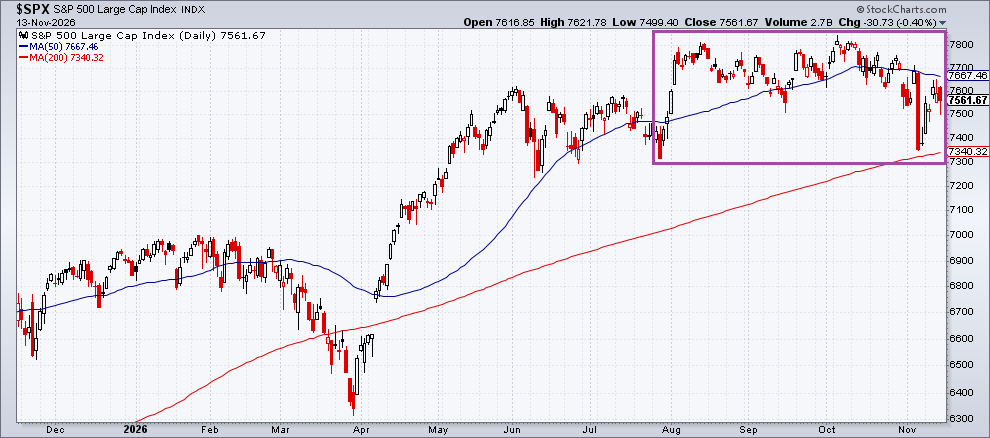
The tech-heavy Nasdaq has shown somewhat greater weakness, but even there the damage appears modest given the magnitude of last week’s headlines.
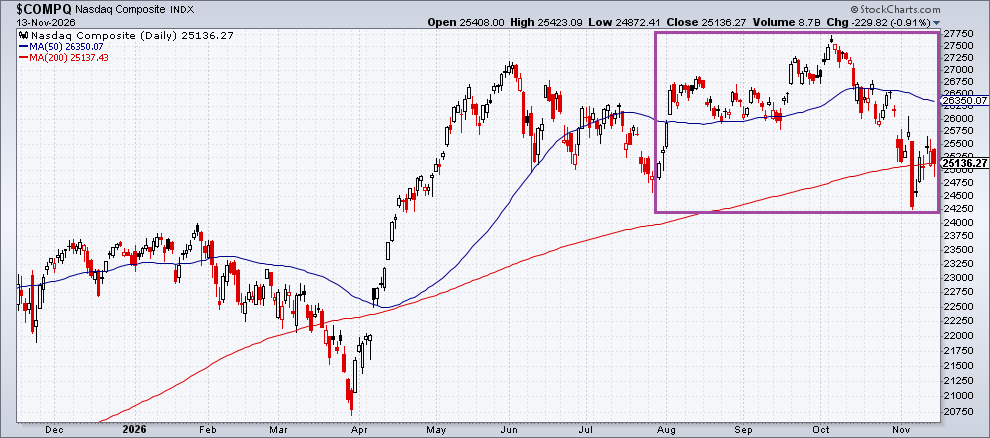
The stability in broad market indexes offers a counterpoint to warnings that the AI boom is on the verge of collapse. Some observers, however, argue that the risks are merely being deferred. Gary Gensler, former chairman of the U.S. Securities and Exchange Commission, tells CNN that the AI boom is “already a bubble” and that its eventual unwinding is only a matter of time.
“History tells us that when you have a new technology and a significant investment… you come to a point where it plateaus. It retrenches,” he advises. “The only question is if it’s a soft recession or something more dramatic.”
The bulls counter that the fundamental drivers of AI demand remain intact. “AI demand remains strong,” according to recent research from Barclays. “What the market is questioning is funding, as hyperscalers keep lifting capex while free cash flow evaporates.”
From an earnings perspective, the numbers are showing early signs of moderation, although the broader picture remains favorable. As FactSet’s John Butters reports: “To date, 91% of the companies in the S&P 500 have reported earnings for the third quarter. Of these companies, 84% have reported actual EPS above the mean EPS estimate, which is above the 5-year average of 78% and above the 10-year average of 77%.”
As for the potential spillover from Nvidia, bulls insist that despite the company’s leadership turmoil, it remains a critical supplier of advanced semiconductors to U.S. technology firms. Some argue that the recent shakeout could ultimately prove healthy, prompting a moderate degree of de-risking without undermining the secular growth trend that has powered the broader technology sector.
Last week’s developments weakened the case for optimism at the margin, but incoming economic data continue to point to a resilient economy. The Atlanta Fed’s GDPNow model currently estimates fourth-quarter GDP growth at a robust 3.5%. If correct, it would suggest that the acceleration in economic activity that emerged in the third quarter is carrying through to year-end.
Even so, the economy has become increasingly intertwined with the AI investment cycle. That linkage has been beneficial so far, but it also creates a potential source of vulnerability.
So far, so good, but the fact remains that the economy is now closely bound up with AI, for good or ill. But the potential for trouble is clear when you consider that the growing dependence on GDP growth to tech. Analysis at the St. Louis Fed in January documents the influence, estimating that AI’s contribution to GDP growth can swing dramatically: “Through the third quarter of 2025, these categories made up 39% (36% excluding data centers) of total GDP growth versus 28% in 2000.”
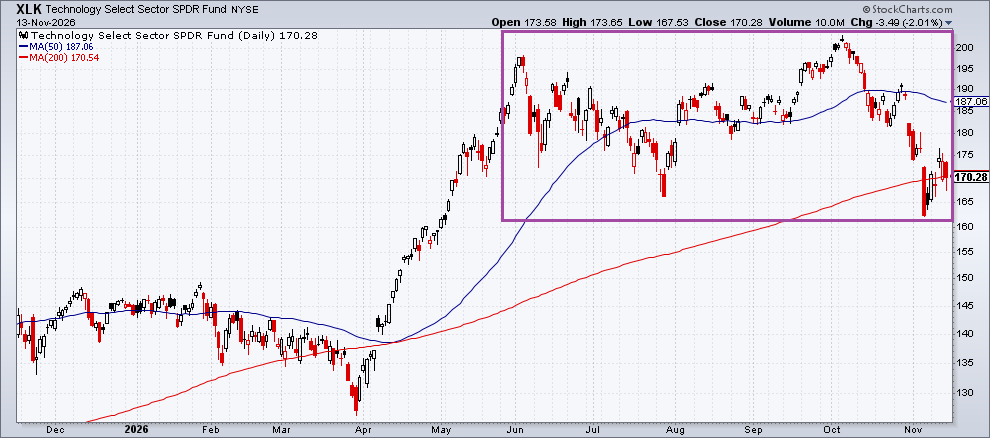
AI risk, in short, has become economic risk. Gauging the magnitude of that threat is difficult, but investor sentiment remains broadly constructive. That assessment could change quickly if equities begin to break down, particularly within the technology sector. A decisive violation of recent support levels, including roughly $165 for the Technology Select Sector SPDR ETF (XLK), would strengthen the case that investors are becoming concerned that expectations of AI’s fortunes are overextended.
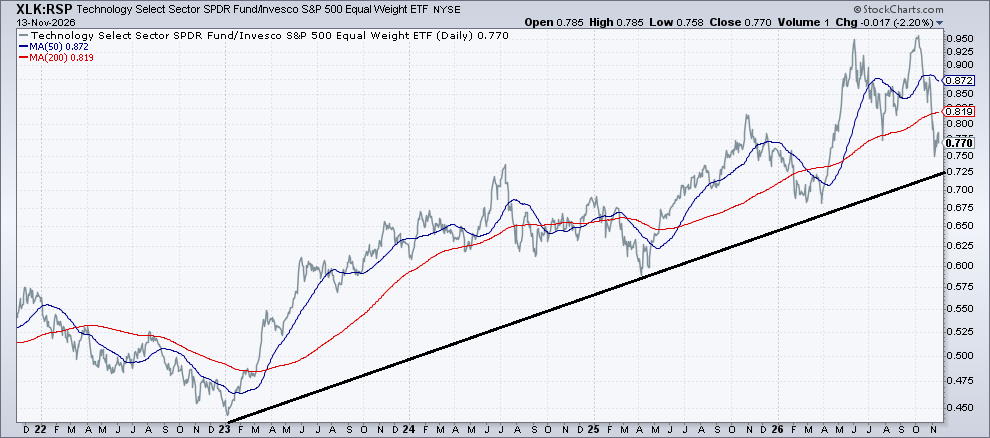
Another useful measure of sentiment is the ratio of technology stocks (XLK) to an equal-weighted S&P 500 portfolio (RSP). The ratio has been climbing for years, reflecting the market’s growing confidence in the technology sector and the AI theme. A decisive break below the long-term uptrend would be a notable warning sign, suggesting investors are starting to question whether tech can continue to generate the earnings growth that has justified its leadership. In that case, Nvidia’s troubles could become a catalyst for a broader reappraisal of the AI investment story.
Is Recession Risk Rising? Monitor the outlook with a subscription to:
The US Business Cycle Risk Report