Wall Street has been on alert for more policy tightening after the Federal Reserve lifted its target rate last week for the first time in three years. But the view on timing was hazy, until yesterday.
The Path to Lower Inflation Still Runs Through Iran
Absent the Iran conflict, U.S. inflation would likely be lower and probably trending down for some measures of pricing pressure. The problem, of course, is that the odds still appear low for a quick end to the crisis, although there’s renewed hope that the hostilities may be entering a less-volatile phase. If the war is transitioning toward a lower-intensity stage, that could help tame inflation in the months ahead, which could limit the number of Federal Reserve’s interest-rate hikes.
AI Optimism Returns, Pushing Inflation Risks Into the Background
Investors appeared poised to refocus on rising interest rates last week and related fallout for stocks. Then came Meta’s latest AI unveiling, which helped revive the market’s preferred mantra: strong AI-driven earnings growth can overcome virtually any macro challenge.
US Economy Picks Up in Q3 as Rising Rates Threaten Momentum
The US economy continues to show signs of rebounding in the third quarter after downshifting in Q2, according to several GDP nowcasts. Rising interest rates cloud the outlook for the year’s final quarter and beyond, but next month’s release of the Q3 GDP report is expected to show a solid pickup in output.
Book Bits: 19 September 2026
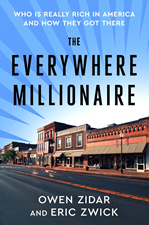 ● The Everywhere Millionaire: Who Is Really Rich in America and How They Got There
Owen Zidar and Eric Zwick
Review via Planet Money
Who is rich in America, and how did they get there?
That’s the central question of an eye-opening new book, The Everywhere Millionaire, by two economists who have spent more than a decade researching the wealthiest Americans. Their answer challenges the popular narrative that America is in a new Gilded Age dominated by a small number of spectacularly rich billionaires.
Look beyond Silicon Valley. Look beyond Wall Street. There’s a much larger class of wealthy Americans hiding in plain sight. They’re all around the country. And, often, they got rich in mundane ways. They own car dealerships. They sell hot dogs and frozen mini-quiches. They run waxing salons. They supply fabricated metal and urinal cakes. They are dentists.
The Bulls Still Have the Edge, but the Margin Is Narrowing
On paper, the list of risks hanging over the U.S. economy and financial markets is daunting. Presented with today’s concerns a few years ago, a rational investor might have concluded that trouble was brewing and that shifting portfolios toward a more defensive stance was prudent. Yet the past several years have shown that caution has not been a winning strategy. The risks have evolved, but the bulls have prevailed. That resilience may seem surprising given the steady stream of troubling headlines. But investors who focused on trend analysis often found evidence that markets could withstand the apparent threats and continue advancing.
Trump Can Pressure the Fed. He Can’t Control Bond Yields.
The Federal Reserve raised interest rates yesterday, resisting President Trump’s demands for lower borrowing costs. Fed Chairman Warsh outlined his views on inflation, which he said is still too high, suggesting the central bank may be headed for a rocky relationship with Trump in the months ahead. Adding to the uncertainty is the bond market’s mixed reaction to yesterday’s hawkish pivot and new forecasts from policymakers that additional rate hikes are likely.
The Fed’s Next Chapter May Decide the Fate of the Bull Market
The US stock market is still posting strong gains for the year, but rising Treasury yields, if they continue to move higher, pose a threat to the bull run. A review of the major equity risk factors already shows what could be an early shift in leadership, a shift that could accelerate if interest rates continue rising in the weeks and months ahead.
Inflation Signals Clash Ahead of High-Stakes Fed Decision
The Federal Reserve usually looks through headline measures of inflation and focuses on core readings when adjusting monetary policy and setting its target rate. The reasoning is that core inflation generally does a better job of capturing the underlying trend of price changes and ignores short-term noise. The challenge is deciding whether this time is different.
Treasury Yield Premium Surges Amid Inflation and Debt Worries
The bond market continues to demand a higher risk premium, based on fair-value estimates for the US 10-year Treasury yield. Driven by concerns about sticky inflation and mounting government debt, the benchmark rate’s spread over fair value in August rose to its highest level since January 2025.