Inflation has climbed in the wake of the energy shock stemming from the Middle East, and economists expect the upward pressure to persist in the months ahead. The Federal Reserve is monitoring the data closely, but it left interest rates unchanged at its most recent policy meeting late last month. The Fed funds futures market is still assigning high odds to the Fed holding steady at the next several meetings. The question now is how high inflation will rise before the central bank feels compelled to resume rate hikes.
One reason the Fed prefers to wait before tightening policy is the relatively stable pace of inflation in the so‑called core measures of pricing pressure. Although headline inflation—which includes food and energy—has turned sharply higher since the war began, core measures have remained comparatively steady.
The case for central banks focusing on core inflation is that these measures provide a more reliable read on underlying trends, offering a more practical benchmark for setting monetary policy. Not everyone agrees with this approach, but as long as core inflation remains stable, the Fed can argue that additional rate hikes aren’t yet warranted.
The Fed reportedly emphasizes the core Personal Consumption Expenditures (PCE) Price Index, which tracks changes in the price of goods and services purchased by households, excluding the more volatile categories of food and energy. But several variations of core inflation exist, and monitoring a range of alternatives can provide a clearer sense of how conditions are evolving—and how those changes may influence the timing of future rate increases.
For context, the chart below highlights the median year‑over‑year change for six core inflation indexes. Each index has its own strengths and weaknesses—see the links at the end of this article for details. It’s debatable whether any single measure is superior, so tracking the median is a useful starting point. In April, the median rose to 2.82% from a year earlier, still close to the softest pace in recent history.
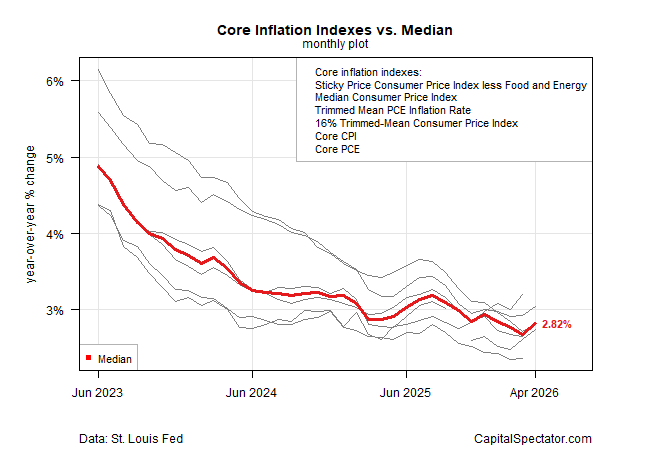
The main takeaway is that while core inflation edged higher in April, the broader trend has yet to flash a warning—unlike the sharper increases seen in headline inflation.
It remains unclear when, or if, the Fed will begin raising interest rates in response to the ongoing energy shock from the Middle East. But if the core measures shown above continue to drift higher, pressure for tighter policy will almost certainly grow.
Sticky Price Consumer Price Index less Food and Energy
Trimmed Mean PCE Inflation Rate
16% Trimmed-Mean Consumer Price Index
