In late February, the US 10-year Treasury yield was trending lower, dipping below 4.0% on the final trading day of the month. The macro outlook at the time suggested the benchmark yield would dip even lower in the coming weeks, a view supported by the downside trending behavior that month. But on Feb. 28, the bombs started falling on Iran, an event that reversed the 10-year yield’s slide—a turnaround that has strengthened in July.
Author Archives: James Picerno
Small Caps Challenge Momentum Factor’s Throne
The momentum risk factor has been leading the field in recent history, but there are signs that a rotation may be underway, based on a set of ETFs through yesterday’s close (July 20).
Diversified Portfolios Show Resilience Amid Escalating Iran War
With the Iran war escalating, the conflict is again getting harder to ignore, which strengthens the case for maintaining a globally diversified portfolio. The reasoning isn’t based on assuming that a broad approach to asset allocation will outperform other strategies or deliver superior risk management. Although one or both outcomes are possible, the stronger case for leaning into global diversification is that it rests on the idea that markets can, and often will, deliver surprising results.
Book Bits: 18 July 2026
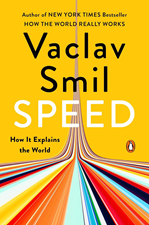 ● Speed: How It Explains the World
Vaclav Smil
Review via The Wall Street Journal
We are often told that the speed of innovation today is faster than ever before and accelerating exponentially. But as we prod and marvel at our smartphones or develop parasocial relationships with our chatbots, it’s useful to remember that a few decades spanning the turn of the 20th century saw the invention of lightbulbs, the electric automobile, home refrigeration and powered flight. How fast are we really going now by comparison? And is faster necessarily better?
That is the question posed in “Speed,” a marvelously encyclopedic book by Vaclav Smil, an environmental scientist and professor emeritus at the University of Manitoba.
US Q2 GDP Growth Expected Near Q1’s Increase
Economic activity is on track to expand close to the pace reported in the first quarter, based on the latest Q2 nowcasts compiled by The Capital Spectator. The median estimate suggests growth will ease slightly from Q1.
Cooler June Inflation Clashes with Fresh Middle East Risk
Federal Reserve officials are talking tough on inflation, but the outlook for monetary policy is still cloudy amid murky geopolitical and economic conditions.
June’s Drop in the Yield Premium Faces a Gulf‑Driven Reality Check
The market premium for the U.S. 10‑year Treasury yield dipped in June after rising for three months, based on a fair‑value estimate calculated by The Capital Spectator. The decline coincided with last month’s expectations that the war‑driven rise in inflation expectations had peaked. But the resumption of hostilities in the Gulf in recent days has raised questions about whether recent optimism on the inflation outlook is premature.
The US Expansion Continues, but Its Foundations Are Uneven
The US expansion just marked its six‑year anniversary, and the odds still lean toward growth holding up in the near term. Yet the backdrop is anything but serene. Geopolitical flashpoints, economic crosscurrents, and a thicket of slow‑burn risks continue to accumulate beneath the surface.
Gulf’s Gray‑Zone Conflict Is Becoming a Market Stress Test
The Middle East conflict is a fire that seems to die down, only to flare up from embers that continue to burn. Those embers burned brighter over the weekend as the ongoing cycle of attacks between the US and Iran continued. The military strikes of the past week have had little effect on markets to date, but it’s an open question how a low‑grade war will affect investor sentiment if the fighting drags on for weeks or months.
Book Bits: 11 July 2026
 ● The Asset Class: How Private Equity Turned Capitalism Against Itself
Hettie O’Brien
Review via The Guardian
Private equity partnerships are groups of individual and institutional investors with deep pockets. O’Brien traces their rise following the era of deregulation inaugurated by Reagan and Thatcher, and details how Blackstone, the Qatar Investment Authority, Macquarie, KKR and others have bought undervalued assets using borrowed money to minimise their exposure to risk. What happens next is that costs, wages and investment in the future are frequently cut to the bone in the cause of exceptionally high returns.