A newly extended U.S.–Iran ceasefire and the reopening of the Strait of Hormuz are fueling cautious speculation that the conflict may be entering its final phase. The news will likely give financial markets a boost in the near term, assuming the agreement that the U.S. and Iran announced on Sunday holds.
Author Archives: James Picerno
Book Bits: 13 June 2026
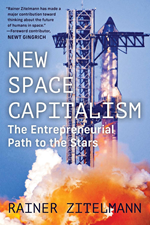 ● New Space Capitalism: The Entrepreneurial Path to the Stars
Rainer Zitelmann
Review via Real Clear Markets
“Space Economics” has only recently become a thing. Economics is the science of scarcity. Where there is scarcity, there is economics. “Scarcity,” in an economic sense, means that a resource satisfies a human want, but there is not enough of it to satisfy all of those potential wants. So we need to figure out a way to allocate ownership and/or usage rights over the resource. Who gets to use it, how much of it, and in what way?
What counts as a “scarce resource,” in an economic sense, changes over time. It depends, among other things, on our technological possibilities. Oil was not a scarce resource until we figured out how to make use of it: it was just a black liquid which nobody wanted, so the question of how we should allocate property rights over oil wells was not especially relevant. Then oil became “black gold,” and all of a sudden, it mattered hugely.
Markets Stay Risk‑On Despite Alarming Headlines
Maintaining a bullish outlook on markets has become an emotionally challenging affair in recent history, but the crowd continues to look through the constant flow of troubling news and concludes that it’s still reasonable to stay the course. Informed or not, that sentiment has been a winning strategy so far, and remains on display in several sets of ETF pairs that track key market segments through yesterday’s close (June 11).
US 10-Year Yield Risk Premium Continues To Rise
The Iran conflict and rising inflation risk have continued to widen the market premium for the 10‑year yield relative to a fair‑value estimate. As discussed last month, a shift in market sentiment appeared to be unfolding, and today’s update for May underscores the change.
Nowcast Data Suggest US Growth Is Accelerating In Q2
The Middle East crisis appears no closer to resolution, underscored by Tuesday’s US military strikes on Iran. If recent history is a guide, the effects on the U.S. economy will be minimal, as today’s update on nowcasts for second‑quarter GDP suggests.
Safe Havens No More? Treasuries Sink While Riskier Debt Rallies
The search for higher yields continues to elevate the riskier facets of the bond market since the Iran conflict started. By contrast, most slices of the Treasury market remain underwater, based on a set of ETFs.
Is a Prolonged Middle East Conflict Becoming the Base Case?
Starting a war is easy; ending one is hard. That simple calculus is increasingly resonating in financial markets as the backlash from the Middle East conflict persists and evolves. The economic effects have varied, but the recent optimism that the US would remain largely insulated is fading. Markets are beginning to demand higher risk premia as compensation.
The ETF Portfolio Strategist: 07 JUN 2026
Trend Watch: Global Markets & Portfolio Strategy Benchmarks
Inflation worries weighed on markets last week. Not exactly news at this late date, but the better‑than‑expected US payrolls data for May highlighted that the world’s biggest economy remains resilient in the face of an energy crisis. Treasury yields, unsurprisingly, rose as investors sharpened their focus on the possibility that inflation risk may linger longer than recently expected, supported by a relatively robust economy, which in turn lifts the odds that the Federal Reserve may soon start raising interest rates.
No one should dismiss these concerns, but it’s still early for strategic‑minded investors to assume the worst‑case scenario is baked in. By some measures, a pullback was overdue. The S&P 500 Index had rallied for nine straight weeks, a relatively rare event with only ten prior occurrences to the latest run‑up, according to The Motley Fool. The odds for a pause were high even before Friday’s surprisingly strong jobs report.
Thanks for reading The ETF Portfolio Strategist! Subscribe for free to receive new posts.
Global asset‑allocation strategies suffered on Friday as well. All of our proxy ETFs fell sharply last week. The aggressive strategy (AOA) was especially hard hit, slumping 2.3%.
continue reading at The ETF Portfolio Strategist

Book Bits: 6 June 2026
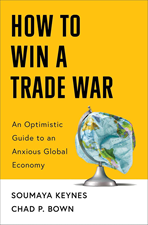 ● How to Win a Trade War: An Optimistic Guide to an Anxious Global Economy
Soumaya Keynes and Chad P. Bown
Review via Reason
The ancient Chinese military strategist Sun Tzu advised that “he who wishes to fight must first count the cost.” Joshua, the brilliant (for its time) computer in the 1983 film WarGames, did the counting and concluded that “the only winning move is not to play.”
Both lines find their way into How To Win a Trade War. This is no arid academic analysis, and it does not read like one. Instead, Soumaya Keynes, a journalist at the Financial Times, and Chad Bown, a senior fellow at the Peterson Institute for International Economics, have crafted a witty, fast-paced analysis of how the global trading system has unraveled in the aftermath of COVID, Brexit, and (most importantly) President Donald Trump’s electoral successes.
Research Review | 5 June 2026 | Risk Management
Measuring Bubbles via Put-Call Disparity: A Model-Free Approach
Robert A. Jarrow (Cornell U.) and Simon Kwok (U. of Sydney)
May 2026
This paper introduces simple, model-free lower and upper bounds for measuring the size of asset price bubbles. Assuming only that the market satisfies no-free-lunch-with-vanishing-risk and that all trading strategies are admissible, our framework avoids restrictive parametric models and the no-dominance assumption. We demonstrate that put-call disparity provides an observable lower bound, and is economically justified by short-sale constraints. Additionally, the lowest price of an out-of-the-money (OTM) call option determines the upper bound. To ensure empirical reliability, we modify these bounds using data-driven regularization and bootstrap methods to disentangle genuine bubble signals from market microstructure noise and to reduce reliance on thinly traded deep OTM options. Using S&P 500 index option prices from 1996 to 2025, we document a sustained bubble during the COVID-19 era and capture market exuberance preceding the 2000 dot-com and 2008 financial crashes. In addition, the empirical study suggests that the market violates no-dominance and is incomplete.