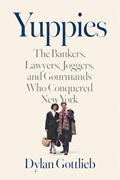
 ● Yuppies: The Bankers, Lawyers, Joggers, and Gourmands Who Conquered New York
Dylan Gottlieb
Review via The Wall Street Journal
“Violent gentrification” is an eye-catching phrase akin to “Canadian depravity” or “Luxembourgish aggression.” If it exists, it isn’t obvious. In “Yuppies: The Bankers, Lawyers, Joggers, and Gourmands Who Conquered New York,” Dylan Gottlieb does his best to alarm readers about his subject and their nefarious doings, such as moving into dicey neighborhoods and turning them into havens for fragrant bakeries and adorable cafes.
The term “yuppie” is as closely tied to the 1980s as “hippie” is to the ’60s. Young urban professionals have usually been discussed in comic terms, by such writers as Tom Wolfe and P.J. O’Rourke, with gentle mockery or even wry affection. Mr. Gottlieb, a professor of history at Bentley University, produces nearly 300 pages on the topic without a trace of humor, except in quotation.
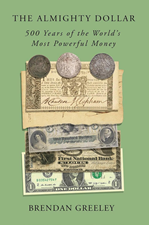 ● The Almighty Dollar: 500 Years of the World’s Most Powerful Money
Brendan Greeley
Interview with author via Marketplace.org
When it comes to the global financial system, you can’t really beat the dollar. It’s the dominant global reserve currency, making up over half of the foreign reserves held by central banks around the world. But how did the dollar become so important?
While you could say it goes back to the 1944 Bretton Woods Conference, the answer might predate that. In his new book, “The Almighty Dollar: 500 Years of the World’s Most Powerful Money,” journalist and financial history academic Brendan Greely suggests the dollar’s rise is partially due to the philosophy of money and also the history of the American banking system.
“To understand why American bank dollars had value, we have to go back a little farther [than Bretton Woods],” said Greeley. “We had banking panics every 15 years or so in the 19th century. After each one of these banking panics, we end up with regulation.”
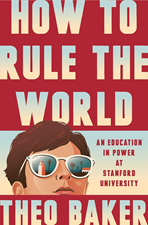 ● How to Rule the World: An Education in Power at Stanford University
Theo Baker
Summary via publisher (Penguin Press)
From Theo Baker, winner of the George Polk Award for his investigation that brought down Stanford’s president, comes a revelatory and gripping account of Silicon Valley hubris. Slush funds. Shell companies. Yacht parties. This is life for Silicon Valley’s favored teenagers. Seventeen-year-old Theo Baker showed up for freshman year at Stanford University as a tech-obsessed coder. It seemed like paradise. There were Rodin sculptures next to nuclear laboratories and inventors lounging with Olympians. But Baker soon discovered a culture that embraced corner-cutting, that vested infinite excess and access in the hands of kids with few safeguards to catch bad behavior. Stanford, he realized, was less a school than a business.
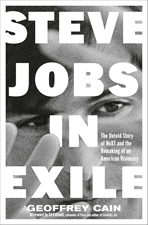 ● Steve Jobs in Exile: The Untold Story of NeXT and the Remaking of an American Visionary
Geoffrey Cain
Excerpt via Vanity Fair
“I’m asking Steve to step down,” Apple CEO John Sculley told the company’s board of directors, “and you can back me on it . . . or you’re going to have to find yourselves a new CEO.”
It was April 11, 1985, and long-simmering tensions between John Sculley and Steve Jobs had finally erupted. It marked a stunning reversal. Just two years earlier, Steve had handpicked and personally recruited John from PepsiCo. Apple had grown into a billion-dollar company, and Steve, along with the board, felt that John would be the right person to provide the company with “adult supervision” as its CEO. After John joined, Steve remained chairman of the board and head of the Macintosh unit, where he led the development of the company’s flag- ship personal computer.
Please note that the links to books above are affiliate links with Amazon.com and James Picerno (a.k.a. The Capital Spectator) earns money if you buy one of the titles listed. Also note that you will not pay extra for a book even though it generates revenue for The Capital Spectator. By purchasing books through this site, you provide support for The Capital Spectator’s free content. Thank you!